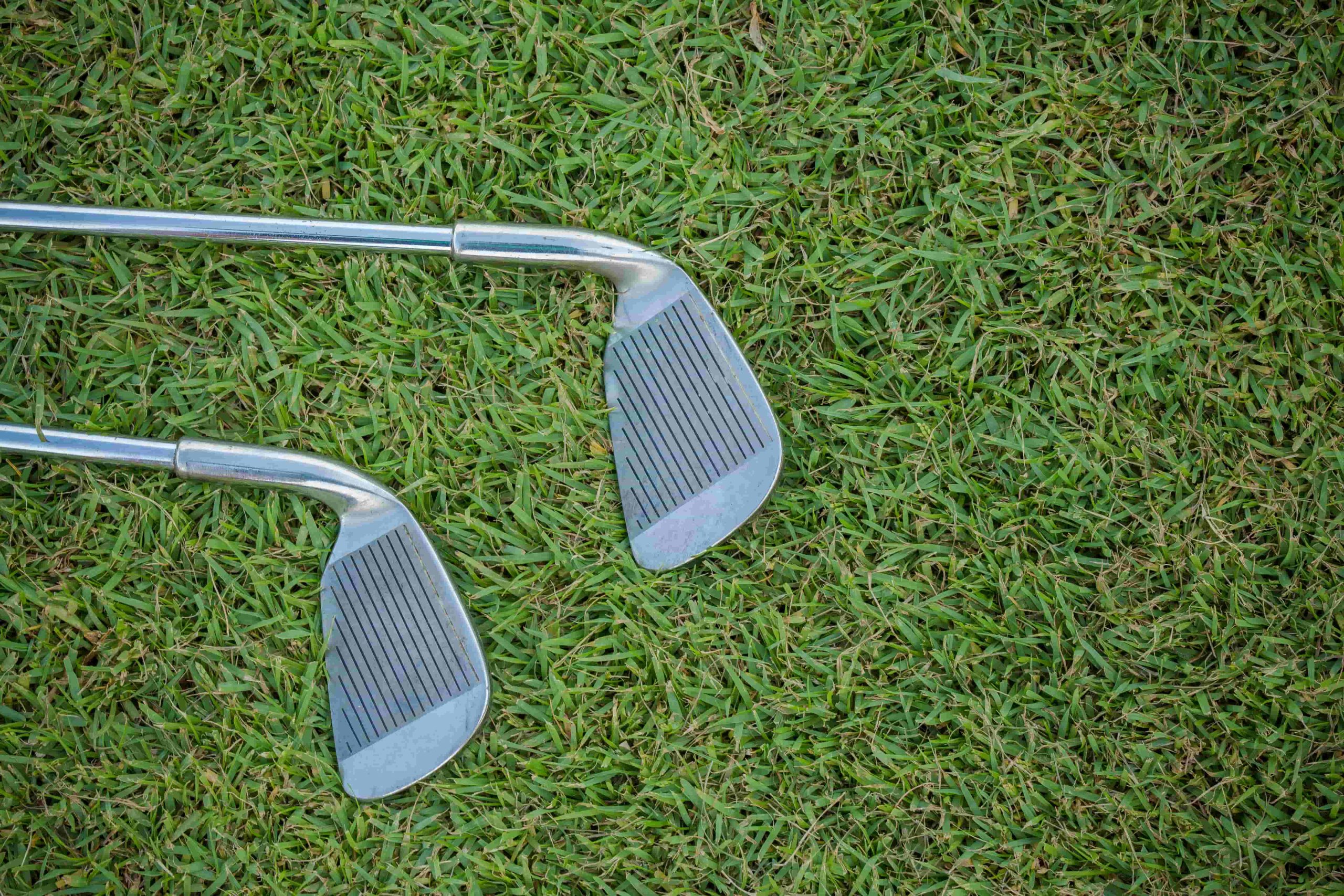
Walk into any golf shop and you’ll see irons ranging from $400 to $2,000, with terms like “game improvement,” “players distance,” and “blade” thrown around. For beginners, the options are overwhelming. For pros, the choices are even more specific. The truth is, the best iron for a 25-handicap is completely wrong for a scratch golfer — and vice versa. This guide compares the top irons across three categories: game improvement (beginners and high handicaps), players distance (mid handicaps), and players irons/blades (low handicaps and pros). You’ll learn what makes each category different and exactly which models lead their class in 2026.
The Three Iron Categories Explained
Before comparing specific models, understand the three distinct iron categories. Game improvement irons feature oversized heads, thick top lines, wide soles, and perimeter weighting. They maximize forgiveness on off-center hits and help get the ball airborne. Players distance irons blend a smaller look with hollow-body construction and thin faces for ball speed while maintaining reasonable forgiveness. Players irons and blades have compact heads, thin top lines, minimal offset, and maximum workability — but punish mishits severely. Beginners should never touch blades. Pros almost never play true game improvement irons. Match the category to your skill level, not your ego.
Best Game Improvement Irons for Beginners (2026)
The game improvement category has never been better. These irons practically beg the ball to go straight and high. Leading the pack is the Callaway Elyte. Testers praised its “significant distance gains” and incredible forgiveness, though some noted the strong lofts can create large gaps between clubs. The TaylorMade Qi HL (High Launch) is specifically designed for moderate swing speeds, maximizing height and carry distance — exactly what beginners need. The Ping G440 continues Ping’s legacy of forgiving irons with excellent turf interaction and consistency. For budget-conscious beginners, the Tour Edge Hot Launch E524 offers premium features at a fraction of the price, and the Cleveland Launcher XL 2 delivers extreme perimeter weighting that makes mishits nearly harmless. Any beginner will play well with any of these five models.
Best Players Distance Irons for Mid Handicaps (2026)
Once you break 90 consistently, you might want something that looks better at address and offers more workability without sacrificing all forgiveness. The players distance category fills this gap perfectly. The TaylorMade Qi leads this category, offering a perfect balance of distance, feel, and forgiveness in a slightly more compact package. The Callaway Elyte X provides explosive ball speed while maintaining a cleaner look than the standard Elyte. For those wanting the best of both worlds, the Titleist T200 remains a gold standard — it looks like a player’s iron but performs like a game improvement club. The Ping i530 offers incredible consistency and a satisfying feel at impact. Mid handicappers should test all of these before deciding; the right fit depends on whether you prioritize distance, feel, or forgiveness.
Best Players Irons and Blades for Pros / Low Handicaps (2026)
Low handicaps and pros demand workability, feel, and precise distance control — not maximum distance or forgiveness. The Titleist T100 is the most played iron on professional tours for good reason. It offers a compact blade-like look with surprising forgiveness through tungsten weighting. The TaylorMade P770 provides a hollow-body construction that feels solid while offering more speed than traditional blades. For pure blade enthusiasts, the Miura CB 302 represents the pinnacle of forged feel and craftsmanship — but it demands a perfect swing. The Callaway Apex Pro and Srixon ZX7 Mk II round out the category with exceptional feel and turf interaction. Unless you’re a single-digit handicap or better, these irons will be punishing. But for those with the skill, nothing beats the feedback and control of a premium players iron.
Game Improvement vs. Players Distance: Head-to-Head
Where should a mid handicapper land? Compare two category leaders: the Callaway Elyte (game improvement) vs. the TaylorMade Qi (players distance). The Elyte launches higher, spins more, and is significantly more forgiving on toe and heel strikes. The Qi launches lower, spins less, and produces more ball speed — but mishits lose more distance. For a 15-handicap who hits the center of the face inconsistently, the Elyte is the better choice. For a 8-handicap with solid strike patterns who wants to shape shots, the Qi wins. The gap between these categories has narrowed dramatically in recent years, but the fundamental trade-off between forgiveness and workability remains.
What Beginners Need to Know Before Buying
If you’re a beginner or high handicapper (18+ handicap), ignore any iron with the words “blade,” “pro,” “tour,” or “muscle back.” You need game improvement irons — period. Look for these features: a thick top line (easier to align), wide sole (prevents digging), high offset (helps square the face), and perimeter weighting (keeps mishits online). Graphite shafts are often better for beginners because they’re lighter and help generate swing speed. Don’t buy a full set of 3-PW; most beginners can’t hit a 3 or 4 iron. Instead, buy 5-PW, GW, and add hybrids for longer shots. The best “beginner” iron of 2026 is arguably the TaylorMade Qi HL or Cleveland Launcher XL 2 — both are extremely forgiving and launch the ball high. Your goal is getting the ball airborne and straight, not working the ball left to right.
What Pros and Low Handicaps Look For
Low handicaps (0-5 handicap) and pros prioritize different things. Workability — the ability to curve the ball intentionally — is paramount. Blades and players irons allow skilled players to manipulate trajectory and shape. Feel is also critical; forged heads provide better feedback on strike quality. Distance control matters more than raw distance; pros need to know exactly how far each iron carries, not maximize yardage. Turf interaction — how the sole glides through the turf — becomes increasingly important on firm or tight lies. The Titleist T100 and Miura CB 302 excel in all these areas. One warning: even many low handicaps are better off with players distance irons like the TaylorMade Qi or Ping i530. Blades offer minimal benefits for anyone not playing elite-level golf.
Forgiveness Comparison: How They Stack Up
Forgiveness — measured by how much distance and accuracy you lose on mishits — varies dramatically across categories. Game improvement irons retain up to 85-90% of distance on toe strikes. Players distance irons retain about 75-85%. Players irons retain 65-75%. Blades retain as little as 50-60% on severe mishits. What does this mean on the course? A beginner hitting a blade will lose 20-30 yards on a toe strike and see the ball curve dramatically offline. The same mishit with a game improvement iron might lose only 5-10 yards and stay near the fairway. For anyone shooting over 90, the extra “feedback” from a blade is just punishment without benefit. Play the most forgiving iron you can stand to look at.
Shaft Selection: The Most Overlooked Factor
The iron head matters, but the shaft matters just as much. Beginners should almost always use regular or senior flex steel shafts or lightweight graphite. Graphite reduces vibration and increases swing speed. Pros and faster swingers need stiff or extra-stiff steel shafts like Dynamic Gold or Project X. The wrong flex destroys distance and accuracy. A beginner with stiff shafts will struggle to launch the ball. A pro with regular shafts will spray the ball everywhere. Get fit for shafts — even a basic fitting at a big box store is better than guessing. The right shaft can make a $500 set of irons perform like $1,500 irons. The wrong shaft can make $1,500 irons unplayable.
Value Picks: Best Irons Under $700
Not everyone needs to spend $1,200 on irons. The Tour Edge Hot Launch E524 series offers game improvement technology for under $600 — hollow-body construction, perimeter weighting, and lightweight shafts. The Cleveland Launcher XL 2 is similarly priced and delivers extreme forgiveness. For those wanting new old stock, previous generation models like the Callaway Mavrik or TaylorMade SIM2 Max can often be found for $400-500 and perform nearly as well as current models. The Wilson Staff D9 is another underrated value pick; Wilson makes excellent game improvement irons that fly under the radar. Don’t be seduced by the latest marketing. A three-year-old game improvement iron is still a game improvement iron and will serve a beginner perfectly well.
Quick Reference: Which Iron Should You Buy?
Use this cheat sheet based on your handicap: 25+ handicap (beginner): TaylorMade Qi HL, Cleveland Launcher XL 2, or Tour Edge Hot Launch E524. 15-24 handicap (high handicap): Callaway Elyte, Ping G440, or TaylorMade Qi. 8-14 handicap (mid handicap): TaylorMade Qi, Callaway Elyte X, or Titleist T200. 5-7 handicap (low-mid): Ping i530, Srixon ZX5, or TaylorMade P770. 0-4 handicap (low handicap): Titleist T100, Callaway Apex Pro, or Srixon ZX7. Scratch or pro: Miura CB 302, Titleist T100 (tour issue), or pure blades like Miura MB-101. Beginners should never buy anything below the 15-24 handicap category. Pros should never buy anything above the 5-7 handicap category.
The bottom line on irons: The best iron for you depends entirely on your skill level, swing speed, and what you value in a shot. Beginners need max forgiveness and high launch — game improvement irons only. Mid handicaps can consider players distance irons but shouldn’t jump to blades too early. Low handicaps and pros have the luxury of choosing based on feel and workability, but even many tour pros use forgiving players irons like the T100. The most important advice: get fitted. A $400 set of properly fitted irons will outperform a $1,500 set off the rack. And never let ego dictate your club choice. The scorecard doesn’t care what your irons look like — only where the ball ends up.