
Walk into any golf shop and you’ll see dozens of boxes claiming to be softer, longer, or more controllable than the competition. The marketing is overwhelming. But choosing the right golf ball doesn’t have to be complicated. The wrong ball can cost you distance, exaggerate your slice, or feel like concrete at impact. The right ball complements your swing speed, spin tendencies, and skill level. This guide gives you a simple step-by-step process to choose the perfect ball for your game — without spending $50 on a dozen balls that don’t fit you.
Step 1: Determine Your Swing Speed
Swing speed is the single most important factor in ball selection. A ball that’s too high-compression for your swing won’t deform enough at impact, costing you distance. A ball that’s too low-compression for a fast swing will feel mushy and spin uncontrollably. Here’s how to estimate your swing speed without a launch monitor. Driver carry distance method: If you carry your driver 200 yards or less, your swing speed is under 85 mph (low compression needed). 200-230 yards carry equals 85-95 mph (medium compression). 230-260 yards equals 95-105 mph (medium-high compression). 260+ yards equals 105+ mph (high compression). 7-iron distance method: 130 yards or less = low compression. 130-150 yards = medium compression. 150-165 yards = medium-high. 165+ yards = high compression. If you don’t know your distances, visit any golf store with a launch monitor — they’ll let you hit a few balls for free. Never guess. Playing the wrong compression handicaps you immediately.
Step 2: Understand Your Spin Tendency
Do you slice, hook, or hit it straight? Your natural shot shape determines how much spin you need from a ball. If you slice (ball curves right for right-handers): You need a low-spin ball. Premium tour balls (Pro V1, TP5) spin more on all shots, making slices worse. Look for balls labeled “low spin,” “distance,” or “straight.” Examples: Callaway Supersoft, Titleist TruFeel, Wilson Duo Soft. If you hook (ball curves left): Same advice — low spin balls reduce curvature. If you hit straight or with a gentle fade/draw: You can consider medium or high-spin balls for better greenside control. If you struggle to get the ball airborne: Choose high-launch, low-spin balls that add height. The biggest mistake is playing a tour ball with a slice. You’ll watch your ball curve into the next fairway and wonder why. Match spin to your swing, not to your ego.
Step 3: Choose Your Compression Level
Once you know your swing speed and spin tendency, compression selection becomes clear. Use this chart:
| Swing Speed (Driver) | Compression | Recommended Balls |
|---|---|---|
| Under 85 mph (carry <200) | Low (40-60) | Callaway Supersoft, Wilson Duo Soft, Titleist TruFeel |
| 85-95 mph (carry 200-230) | Medium (65-80) | TaylorMade Tour Response, Srixon Q-Star, Vice Pro |
| 95-105 mph (carry 230-260) | Medium-High (80-95) | Titleist AVX, Callaway Chrome Soft, Bridgestone Tour B RX |
| 105+ mph (carry 260+) | High (90+) | Titleist Pro V1x, TaylorMade TP5x, Callaway Chrome Soft X |
If you fall between categories, lean toward lower compression. It’s better to have a ball that’s slightly too soft than too hard. A ball that’s too hard never compresses properly and feels like hitting a rock. A ball that’s slightly too soft still works — you just lose a small amount of feel and control.
Step 4: Decide on Cover Material (Urethane vs. Ionomer)
Golf ball covers come in two materials. Urethane covers are soft, provide high greenside spin, and are used on premium balls ($40+/dozen). They offer the best stopping power on chips and pitches but wear faster. Ionomer (Surlyn) covers are harder, more durable, and produce lower spin. They’re used on distance and value balls ($15-$30/dozen). Which should you choose? Beginners and high handicaps (20+): Ionomer. You won’t generate enough spin to benefit from urethane, and the extra spin will make your misses worse. Mid handicaps (10-20): Test both. If you hit greens regularly and want more stopping power, urethane helps. If you still struggle with slices, stick with ionomer. Low handicaps (0-9) and pros: Urethane only. The greenside control is non-negotiable. The exception: players with very high spin rates (hookers) sometimes prefer ionomer for its lower spin. Know your game before buying premium urethane balls.
Step 5: Consider Your Budget and Loss Rate
Here’s a hard truth that most ball guides ignore: if you lose 6 balls per round, you cannot afford to play $4 Pro V1s. That’s $24 per round. Over 20 rounds, that’s $480 — more than a new driver. Be honest about your ball loss rate. Lose 0-2 balls per round: You can play premium balls ($40-55/dozen). Lose 3-5 balls per round: Play value urethane or premium direct-to-consumer ($25-35/dozen like Vice, Cut, Kirkland). Lose 6+ balls per round: Play two-piece distance balls under $20/dozen (Wilson Duo, Callaway Warbird, Nitro). The best ball for you is the one you can afford to play confidently. If you’re afraid of losing an expensive ball, you’ll swing tentatively and play worse. There’s no shame in playing cheap balls until you keep them in play. Many single-digit handicaps play Kirkland or Vice because they’d rather spend money on tee times than golf balls.
Step 6: Test Multiple Balls (The Sleeve Method)
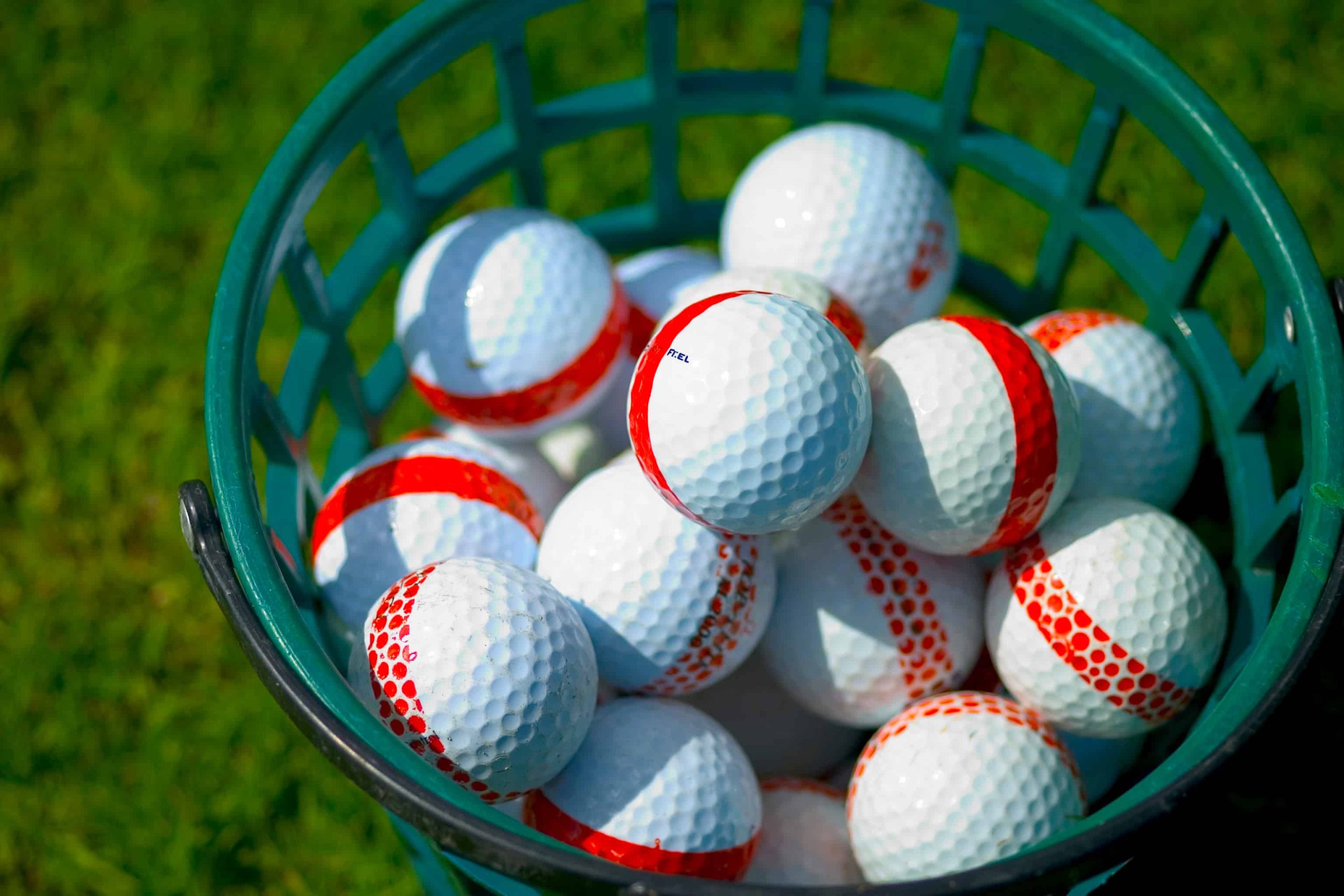
Don’t buy a dozen of anything until you’ve tested at least three options. Here’s the testing protocol. Buy sleeves (3-ball packs) of three different balls in your compression and spin category. Go to a practice green and hit chip and pitch shots with each. Which one feels best? Which stops quickest? Then go to the range and hit 10 drivers, 10 irons, and 10 wedge shots with each ball. Note: distance, feel off the face, and flight pattern. Finally, play 3 holes with each ball (use a different ball on each hole). Keep the balls separate and compare end-of-round condition. The winner is the ball that gives you the best combination of distance, control, feel, and durability. This testing takes one practice session and three holes. It’s the best investment you can make in your scoring. Never buy a ball based on a review alone — your swing is unique.
Special Cases: Seniors, Juniors, and Women
Not all golfers fit the standard swing speed categories. Seniors (60+): Look for ultra-low compression balls (under 50). The Wilson Duo Soft Plus (compression 35) and Callaway Supersoft (40) are excellent. Avoid any ball labeled “tour” or “X” — they’re too firm. Juniors (under 12): Use junior-specific balls like Callaway Junior or Wilson Junior. These have even lower compression (under 35) and are designed for slower swing speeds. Women: Similar to seniors — low compression (under 60). The Titleist TruFeel, Callaway Supersoft, and Bridgestone Lady Precept are excellent options. Many women can play standard low-compression balls, but avoid balls labeled “men’s” that are over 70 compression. The key for all these groups is getting the ball to deform at impact. A ball that doesn’t deform feels like hitting a rock and flies nowhere.
Seasonal and Weather Considerations
The same ball behaves differently in cold vs. hot weather. Cold weather (below 50°F): Balls become harder and lose distance. Switch to softer compression (drop one category). If you normally play medium (80), go to low (60) in winter. The Callaway Supersoft and Wilson Duo are excellent cold-weather balls. Hot weather (above 85°F): Balls become softer and spin more. You may need to move up one compression category if you normally play very soft balls. Windy conditions: Lower-spin balls fly lower and are affected less by wind. A distance ball like Titleist Velocity or Callaway Warbird cuts through wind better than a high-spin tour ball. Wet conditions: Urethane covers get even more spin in wet weather, which can be problematic. Consider ionomer covers on rainy days. Many serious players have a “summer ball” and a “winter ball” — that’s completely reasonable.
The Most Common Ball Selection Mistakes
Avoid these traps that golfers fall into constantly. Mistake #1: Playing a tour ball because your favorite pro plays it. Justin Thomas plays Pro V1x with 115+ mph swing speed. If you swing 85 mph, that ball is actively hurting your game. Mistake #2: Buying balls based on price alone. The cheapest balls (Nitro, Top Flite XL) are rocks that feel terrible and spin inconsistently. Spend at least $15/dozen for decent performance. Mistake #3: Never changing balls as you improve. The ball that worked as a 25-handicap (low spin, distance) is not the ball you need as a 12-handicap trying to hold greens. Re-evaluate every time your handicap drops 5 strokes. Mistake #4: Believing that softer always means better. Soft feel comes from low compression, but too soft for your swing speed costs distance. Mistake #5: Playing mixed balls during a round. Different balls perform differently. Pick one model and stick with it for consistency.
The bottom line on choosing the right golf ball: Follow the five-step process: determine your swing speed, understand your spin tendency, select compression, decide on cover material, and test multiple options. For 90% of golfers reading this, the right ball is either a low-compression distance ball (Callaway Supersoft, Wilson Duo Soft) or a value three-piece ball (Vice Pro, Kirkland Signature). Premium tour balls are only for golfers who swing over 95 mph with driver, hit the center of the face consistently, and need greenside spin to score. Everyone else is wasting money and hurting their game. The best ball for you is the one that goes straight, feels good, and fits your budget. Stop overthinking it, stop chasing marketing claims, and go test three sleeves of balls this weekend. Your scorecard will thank you.