
Walk into any golf shop and you’ll see drivers for $600, iron sets for $1,500, and putters for $500. The price tags are staggering. But does spending more actually improve your game? The answer is complicated: sometimes yes, sometimes no. This guide breaks down where expensive gear matters and where budget options perform nearly identically. You’ll learn the truth about diminishing returns, the real value of club fitting, and how to prioritize your equipment spending based on your skill level and goals.
The Diminishing Returns Curve
Golf equipment follows a classic diminishing returns curve. The jump from a $100 starter driver to a $300 mid-range driver is massive — you gain distance, forgiveness, and consistency. The jump from a $300 driver to a $600 premium driver is small — you gain 2-4 yards and slightly better feel. The jump from a $600 driver to a $1,000 “tour” driver is microscopic — you’re paying for marketing, not performance. The same curve applies to irons, wedges, putters, and balls. The “sweet spot” for value is the previous year’s premium model, which offers 95-98% of current-year performance at 40-50% less cost. Understanding this curve is the first step to smart spending.
Where Expensive Gear IS Worth It
In these categories, spending more delivers measurable benefits. Club fitting ($100-200): The best investment you can make. Custom-length shafts, lie angle adjustments, and grip sizing dramatically improve consistency — far more than any clubhead technology. Golf shoes ($120-200): Cheap shoes ($50-70) lack cushioning and support, leading to foot pain, back fatigue, and loss of concentration. Spend for comfort and stability. Rain gear ($150-300): Cheap rain suits leak and trap sweat. Gore-Tex or comparable waterproof-breathable fabrics keep you dry and comfortable. Lessons ($100-200/hour): Not “gear,” but the best money you’ll spend. A good instructor fixes swing flaws that equipment cannot. Quality golf balls (for low handicaps only): If you swing over 95 mph and generate enough spin, premium balls (Pro V1, TP5) provide consistent flight and greenside control. But beginners should never buy them.
Where Expensive Gear Is NOT Worth It
In these categories, budget options perform nearly identically. Current-year drivers ($600 vs $300 previous-year): A 2-year-old premium driver (Callaway Mavrik, TaylorMade SIM2) performs within 2-3% of the new model. Buy used. Premium putters ($500 Scotty vs $150 Cleveland): Putters are mostly personal preference. A $150 milled putter performs as well as a $500 Scotty for 99% of golfers. Expensive irons ($1,500 vs $700 mid-range): For mid-to-high handicaps, game improvement irons from mid-range or previous-year premium sets perform identically to current flagship irons. Premium golf balls (for high handicaps): If you lose 3+ balls per round or swing under 85 mph, you’re wasting $4 per ball. Play Kirkland or Vice. “Tour” accessories: Alignment sticks, headcovers, and towels are identical to cheaper versions. Don’t pay for logos.
The Truth About Brand Names
Brand loyalty costs money. Titleist, TaylorMade, and Callaway charge premium prices partly for brand cachet — not just performance. Direct-to-consumer brands (Vice, Kirkland, Maltby) offer similar performance at 30-50% less. Component brands (Maltby, GolfWorks) offer even greater savings if you can assemble clubs yourself. Used clubs from premium brands offer the best value — a “like new” Callaway driver from Callaway Pre-Owned costs 40-50% less than new. The logo on your club doesn’t lower your score. The fit does. Don’t be the golfer who overspends for Instagram aesthetics.
Real Data: Testing Premium vs Budget
Independent testing confirms minimal differences. MyGolfSpy tested a $600 driver vs a $250 previous-year driver: distance difference was 3 yards average, dispersion (accuracy) difference was 0.8 yards left/right. Golf Monthly tested $1,200 irons vs $600 irons: distance difference was 2 yards, forgiveness difference was negligible for mid handicaps. The only significant difference was feel — premium clubs sound and feel better, but that doesn’t lower scores. The USGA limits club performance (COR, MOI, size), so clubs cannot get dramatically longer or more forgiving year over year. The law of diminishing returns is real and well-documented.
The Fitting Factor: Why a $500 Fitted Driver Beats a $600 Off-the-Shelf Driver
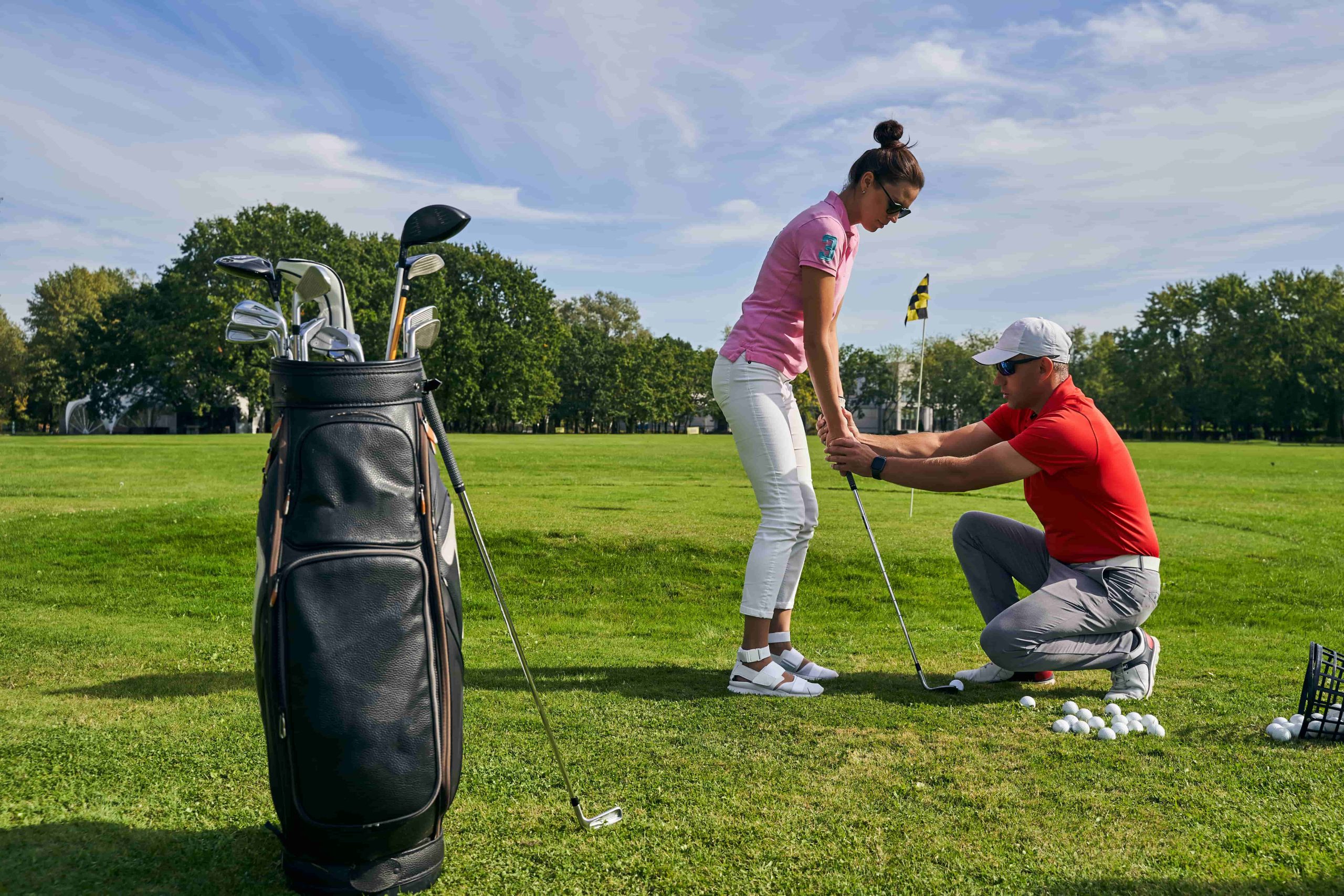
This is counterintuitive but true: a $500 driver that’s properly fitted for your swing will outperform a $600 driver off the rack. Fitting adjusts: Shaft length: Standard is 45-45.5 inches, but most amateurs play better with 44-44.5 inches (more control). Lie angle: Too upright causes pulls; too flat causes pushes. Loft: Adjusting by 1-2 degrees optimizes launch and spin. Grip size: Undersize grips increase hooks; oversize reduce hooks. Shaft flex and weight: The most important variable. A $100 aftermarket shaft that fits your tempo will outperform a $300 stock shaft that doesn’t. Spend your money on fitting, not brand names. A fitted $400 combo (used driver + fitting) will beat a $600 off-the-shelf every time.
Skill Level Recommendations
What you should spend depends entirely on your handicap and commitment. Beginner (25+ handicap, unsure commitment): Spend $300-500 total on a used box set or complete set. Don’t buy anything new. Play found balls. Skip accessories. Invest in 3-5 lessons. High handicap (20-24, playing 10+ rounds/year): Spend $600-800 on a used premium driver, previous-year game improvement irons ($300-400), and entry-level shoes. Prioritize fitting for irons only. Play Kirkland or Vice balls. Mid handicap (12-19, playing 20+ rounds/year): Spend $1,000-1,500 on a fitted driver (previous-year premium), fitted irons (mid-range), quality shoes, and a GPS watch. Consider a launch monitor for practice. Low handicap (6-11, playing 30+ rounds/year): Spend $1,500-2,500 on a full bag fitting, premium irons (Mizuno, Titleist, Srixon), and premium balls (Pro V1 or TP5). Scratch or better (0-5, competing): Spend what you need on custom fitting, tour-level clubs, and premium balls. But even pros often play previous-year equipment.
Where to Save Money Without Sacrifice
These strategies deliver premium performance at budget prices. Buy previous-year models: A 2022-2023 driver performs nearly identically to 2026 models. Buy certified pre-owned: Callaway Pre-Owned, GlobalGolf, and 2nd Swing grade clubs (like new, very good, good). “Like new” are often store demos hit a handful of times. Use direct-to-consumer balls: Vice Pro ($35/dozen) and Kirkland Signature ($15/dozen) offer tour performance at half price. Skip “tour” versions: “Tour” clubs (lower spin, smaller heads) are harder to hit. The standard version is more forgiving. Ignore adjustable weights: Most amateurs never adjust them. Save money on non-adjustable versions. Buy component clubs (Maltby): If you have basic assembly skills, component clubs offer premium performance at 50% cost.
The Best “Expensive” Gear for Amateurs (That’s Actually Worth It)
Some premium gear is worth the splurge for committed amateurs. Quality golf shoes ($150+): FootJoy, ECCO, or Adidas with proper cushioning. Your feet carry you 6-8 miles per round. High-quality rain gear ($200-300): Zero Restriction, Galway Bay, or Gore-Tex jackets. Cheap rain suits leak and trap sweat. Club fitting ($100-200): The single best investment after lessons. Personal launch monitor ($200-500): PRGR or Rapsodo MLM2Pro. Knowing carry distances transforms practice. Push cart ($150-250): Walking improves fitness and focus. A good push cart saves your back. High-quality bag ($200-300): Sun Mountain, Ping, Vessel. Durable, well-organized, lasts years. These items improve your golf experience directly, not through marketing hype.
The bottom line on expensive golf gear: Expensive gear is worth it in specific contexts: club fitting, quality shoes, rain gear, lessons, and (for low handicaps) premium balls. Expensive gear is NOT worth it for most amateurs in current-year drivers, premium putters, “tour” versions, or brand-name accessories. The law of diminishing returns hits hard after $300 for drivers and $700 for irons. Smart golfers buy previous-year premium clubs used, spend money on fitting and lessons, and play value balls (Vice, Kirkland) until their handicap drops below 10. The best gear is the gear that fits your swing — not the gear with the highest price tag or the biggest logo. Spend wisely, play better, and keep your wallet intact.