Golf is a walking sport. The average player walks 6-8 miles per 18-hole round, taking over 10,000 steps. If your shoes aren’t comfortable, those last nine holes become miserable. Your feet swell, your back aches, and your swing falls apart. But comfort alone isn’t enough — you also need traction, stability, and weather protection. This guide breaks down the best golf shoes for every foot type, budget, and playing condition. From spiked to spikeless, waterproof to breathable, budget to premium, you’ll find exactly what fits your game and your feet.
Spiked vs. Spikeless: The Fundamental Choice
Every golfer must choose between traditional spiked shoes and modern spikeless models. Spiked shoes feature replaceable plastic cleats (soft spikes) that dig into the turf for maximum traction. They’re best for wet conditions, hilly courses, and players with aggressive swings who need maximum grip. The downside: they’re less comfortable for walking on pavement and can feel stiff. Spikeless shoes have nubs or lugs molded into the outsole. They’re more comfortable for walking, can be worn to and from the course, and are generally lighter. The trade-off: slightly less traction in wet conditions and on steep slopes. Which should you choose? If you play in morning dew or rain, or you swing aggressively, buy spiked. If you walk most of your rounds, prioritize comfort, or play in dry conditions, spikeless is excellent. Many golfers own both — spiked for wet rounds, spikeless for casual or dry rounds.
Best Overall Golf Shoes (2026)
These shoes excel across comfort, traction, waterproofing, and durability. The FootJoy Premiere Series (Packard or Wilcox) is the gold standard for classic styling and performance. Full-grain leather, exceptional waterproofing, and a fit that FJ is famous for. Expect to pay $190-$220. The ECCO Biom C4 combines ECCO’s signature comfort with outstanding traction and Gore-Tex waterproofing. The most comfortable shoe on this list for walking, but runs narrow. The Adidas Codechaos 22 offers a modern, athletic look with Boost foam cushioning and excellent stability. The New Balance Fresh Foam X SL 2.0 is perfect for walkers — Fresh Foam X is the cushiest midsole in golf. The Under Armour HOVR Drive 2 provides excellent value at $120 with good traction and comfort. Any of these five will serve most golfers well. The best for you depends on foot shape and walking preference.
Best for Wide Feet and High Arches
Standard golf shoes often run narrow, leaving wide-footed golfers in pain. New Balance is the king of wide sizes, offering most golf shoes in 2E, 4E, and even 6E widths. The New Balance Fresh Foam SL 2.0 and New Balance Breeze MD 500 are excellent choices. FootJoy offers many models in wide and extra wide, particularly the FootJoy Pro SL and FootJoy Traditions. ECCO runs narrow and is not recommended for wide feet. Skechers Golf offers naturally wider fits and excellent cushioning for high arches — the Skechers Max Fairway is worth trying. For high arches specifically, look for shoes with removable insoles so you can add aftermarket arch support. PowerStep and Superfeet insoles transform any shoe into one that supports high arches. Never settle for shoes that pinch your toes or lack arch support — foot pain destroys your golf swing.
Best for Maximum Traction (Wet Conditions)
If you play early mornings, in rain, or on hilly courses, prioritize traction above all else. The FootJoy Pro SL features FJ’s most aggressive spiked outsole, with 12 replaceable cleats per shoe. It’s the choice of many tour pros who play in wet conditions. The Adidas Tour360 24 uses a six-cleat configuration with Boost foam and a torsion bridge for stability — excellent grip on any slope. The Puma Ignite PWRADAPT Caged features an aggressive spiked sole with adaptive traction that adjusts to your foot pressure. The ECCO Biom C4 (spiked version) offers outstanding grip with ECCO’s legendary comfort. For spikeless options with surprising wet-weather traction, the Under Armour HOVR Drive 2 Spikeless and Nike Air Max 90 G have well-designed lug patterns. But if you regularly play in wet grass, buy spiked shoes. Spikeless slip in heavy morning dew — it’s physics.
Best for Walking (Cushioning and Weight)
Walking 18 holes places over 10,000 steps of repetitive impact on your feet. Cushioning matters. The New Balance Fresh Foam X SL 2.0 has the softest, most cushioned midsole in golf. Runners recognize Fresh Foam as a premium running shoe foam applied to golf. The Adidas Codechaos 22 uses Boost foam — also excellent for impact absorption. The Hoka One One Golf Shoes (if available in your region) offer maximal cushioning similar to Hoka running shoes. The Skechers Go Golf Elite 5 features Ultra Go cushioning and is exceptionally lightweight (under 10 oz per shoe). The ECCO Biom C4 is not the softest but is the most stable cushioned shoe for walkers with neutral or high arches. Avoid heavy shoes over 14 oz per shoe if you walk — they fatigue your legs. Also avoid shoes with extremely stiff soles (many spiked models) — they inhibit natural walking gait. The perfect walking shoe balances cushioning, flexibility, and weight under 13 oz.
Best Budget Golf Shoes (Under $100)
You don’t need to spend $200 for quality golf shoes. The Adidas Tech Response 3.0 ($70-80) offers solid traction, decent waterproofing, and lightweight construction. The FootJoy Pro SL Sport (on sale often under $90) uses a slightly less premium upper than the Pro SL but same outsole. The Under Armour Showdown Pro 2 ($75-85) has reliable grip and comfortable cushioning. The Puma Fusion Grip Sport ($80-90) features Puma’s excellent Fusion sole with good waterproofing. The Skechers Go Golf Arch Fit (often $90-100) includes Skechers’ excellent Arch Fit insole and good cushioning. Avoid no-name brands on Amazon under $50 — they lack proper traction, leak water, and fall apart within months. The difference between a $70 shoe and a $200 shoe is primarily leather quality, weight, and long-term durability. For casual golfers playing 15-20 rounds per year, a $80 shoe is perfectly adequate.
Waterproofing Ratings: What You Need
Golf shoe waterproofing is not binary — it’s a rating. One-year waterproof warranty: Basic protection for occasional light dew. Most budget shoes fall here. Two-year waterproof warranty: Standard for mid-range shoes. Handles moderate rain and wet grass. Premium waterproof (Gore-Tex or similar): Found on shoes $180+. Handles heavy rain and deep puddles. Do you need Gore-Tex? If you play in rainy climates (UK, Pacific Northwest) or always tee off at dawn (heavy dew), yes. If you play afternoon rounds in dry climates (Arizona, Texas), you can prioritize breathability over waterproofing. The trade-off: waterproof materials are less breathable, so your feet get hotter and sweatier. Some players prefer “water-resistant” mesh shoes for hot, dry rounds. Know your typical playing conditions. A waterproof shoe is miserable on a 95-degree dry day when your feet are swimming in sweat.
How Golf Shoes Should Fit
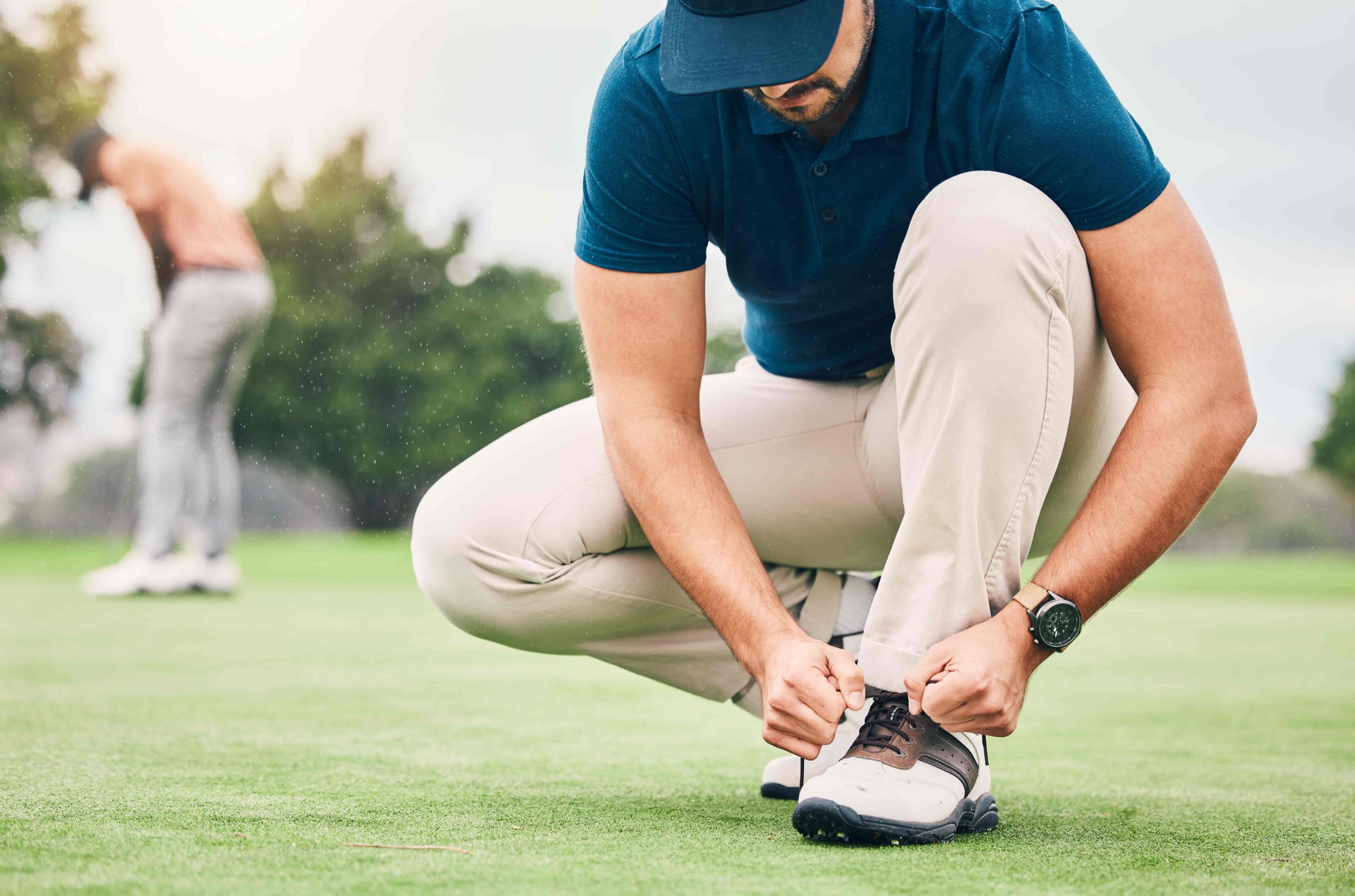
Proper fit is more important than any feature. Follow these rules. Try on at the end of the day when your feet are slightly swollen. Wear the socks you’ll golf in (typically medium-thickness athletic socks). Leave a thumb’s width of space between your longest toe and the end of the shoe. Heel should lock down with no slipping when you walk. Width should be snug but not pinching — you should be able to wiggle your toes. Walk in the store, including up an incline if possible. Many golf stores have small ramps to test traction and fit on slopes. Never buy shoes that feel tight in the store expecting them to “break in” — they won’t stretch enough. Leather shoes will stretch slightly; synthetic shoes barely stretch at all. If you have wide feet or high arches, buy shoes designed for them — don’t try to fit into narrow shoes. Poorly fitting golf shoes cause blisters, black toenails, back pain, and swing compensations.
Spiked Models: Best Replaceable Cleats
If you choose spiked shoes, cleat quality matters. The industry standard is Softspikes brand cleats. Most spiked shoes come with Softspikes pre-installed. The best spiked shoe models for 2026: FootJoy Pro SL (used by more tour pros than any other shoe), Adidas Tour360 24 (best stability and boost cushioning), Puma Ignite PWRADAPT (unique adaptive traction system), ECCO Biom C4 Spiked (most comfortable spiked shoe for walking), Nike Air Zoom Victory Tour 2 (most stylish, but narrow). Expect to replace cleats every 15-25 rounds, or when you notice reduced traction. Carry a cleat wrench and spare cleats in your bag. One lost cleat can make a shoe unwearable until you replace it. Quality spiked shoes last 3-5 years with proper care — replace the spikes, not the shoes.
Spikeless Models: Best for Casual and Dry Conditions
Spikeless shoes have improved dramatically. Modern spikeless outsoles provide impressive traction in dry conditions. The best spikeless models for 2026: Adidas Codechaos 22 (best overall, excellent grip), ECCO Biom C4 Spikeless (most comfortable, Gore-Tex waterproof), New Balance Fresh Foam X SL 2.0 (best cushioning for walkers), Under Armour HOVR Drive 2 (best value spikeless), Skechers Go Golf Elite 5 (lightest weight), True Linkswear Original 1.2 (zero-drop shoe for minimalist feel). The main limitation: spikeless shoes struggle on wet grass, especially on sidehill lies. If you play early mornings (heavy dew) or in rain, choose spiked. If you play afternoon rounds in dry climates, spikeless is more comfortable and convenient. Many golfers keep both: spikeless for summer/casual, spiked for wet/competitive rounds.
Caring for Your Golf Shoes
Proper care doubles the life of your golf shoes. After every round: Remove grass and mud from the sole with a brush or tee. Wipe down leather uppers with a damp cloth (never put leather shoes in water). Remove the insoles and let them air dry separately. Stuff shoes with newspaper to absorb moisture and maintain shape. Never leave shoes in a hot car or garage — heat destroys adhesives and warps materials. Apply leather conditioner every 10-15 rounds to prevent cracking (for leather shoes). Replace spikes before they become completely smooth — worn spikes compromise traction. Store shoes in a cool, dry place with shoe trees or newspaper. For waterproof shoes, test waterproofing annually by submerging the toe in a sink of water (with newspaper inside). If water penetrates, it’s time for replacement or a waterproofing treatment. A well-cared-for pair of premium golf shoes should last 100-150 rounds.
The bottom line on golf shoes: Your shoe choice should prioritize fit and playing conditions above all else. Try on multiple brands — FootJoy runs true to size but narrow, New Balance offers wide sizes, ECCO runs narrow, Adidas and Puma fit average width. For walking 18 holes, prioritize cushioning and weight (New Balance Fresh Foam or Adidas Codechaos). For wet conditions, buy spiked shoes (FootJoy Pro SL or Adidas Tour360). For mixed conditions, the FootJoy Pro SL or ECCO Biom C4 spiked are the safest premium bets. Under $100, the Adidas Tech Response or Under Armour Showdown are solid values. Never compromise fit for price or style. Blisters, black toenails, and foot pain will ruin your round faster than any swing flaw. Invest in shoes that fit perfectly for your foot shape and playing conditions. Your feet — and your scores — will thank you.