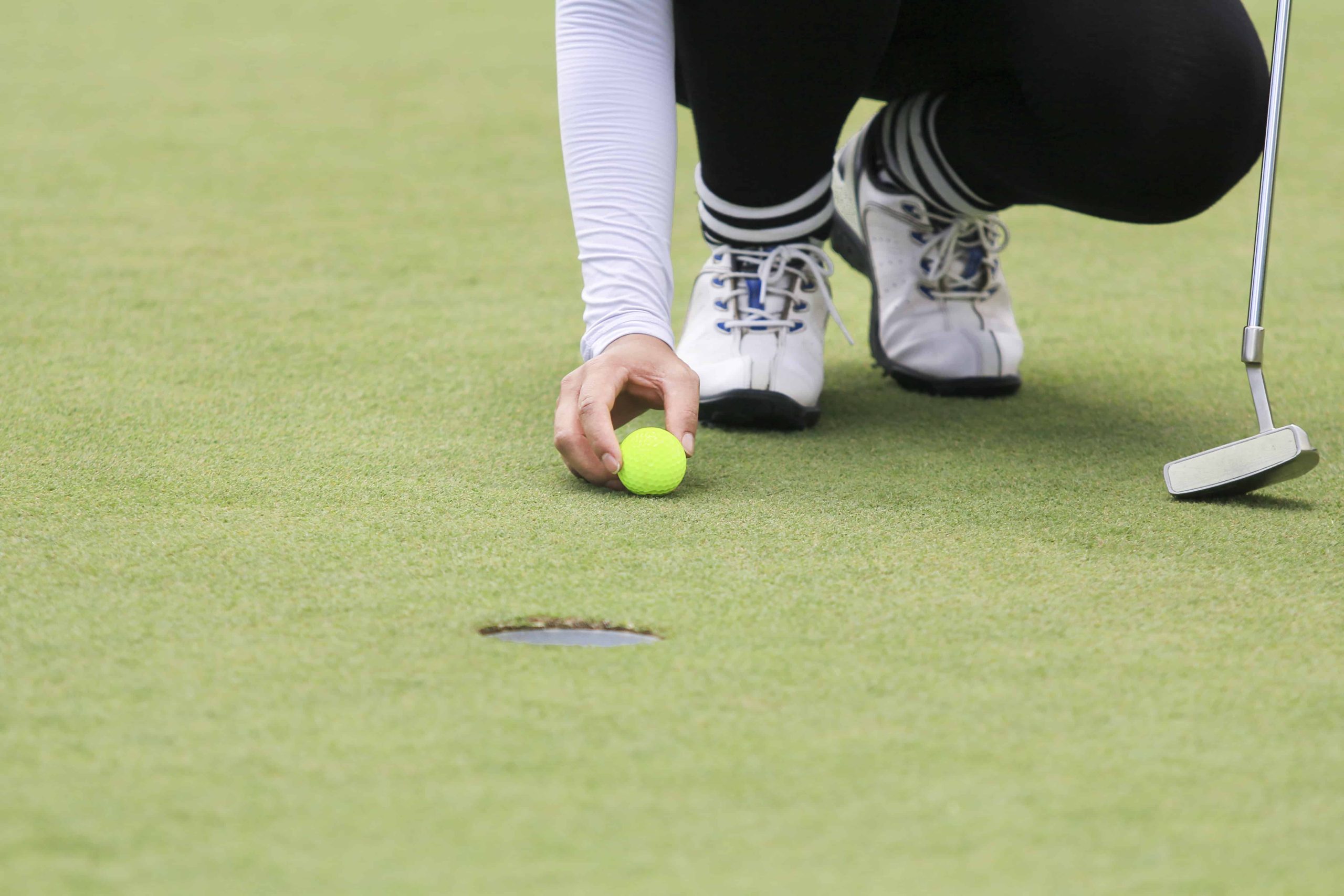

Here’s a truth most beginners discover the hard way: you can hit driver terribly all day and still break 90. But if your short game is bad, you’ll never score well. The players who consistently shoot in the 70s and 80s aren’t necessarily long hitters — they’re magicians around the greens. They get up and down from everywhere. This guide reveals the secret tips that low-handicappers use but rarely share. No complicated swing theory. Just simple, repeatable techniques that will shave strokes off your score faster than anything else in golf.
The Secret of One Club Around the Greens
Most beginners carry four wedges but don’t know which to use. The secret tip: learn to use one wedge for everything around the green first. Pick your most comfortable wedge — usually a sand wedge (54-56 degrees) or a gap wedge (50-52 degrees). Practice every short game shot with that single club: high lobs, low runners, bump-and-runs from tight lies, and bunker shots. Why? Because feel and touch come from repetition with the same tool. Once you master one wedge, then experiment with others. Tour pros can play any wedge because they mastered one first. A great drill: take ten balls and five different lies (tight, fluffy, uphill, downhill, sidehill). Hit all ten with your chosen wedge. Note the different swings each lie requires. Within two weeks, you’ll develop a reliable short game without second-guessing club selection.
The Hinge-and-Hold Method for Chipping
The hinge-and-hold technique is the secret to crisp, consistent chips that roll out predictably. Set up with feet close together, weight 70% on your front foot, hands slightly ahead of the ball. Now hinge your wrists upward on the backswing — like you’re pouring coffee from a pot. The key is holding that wrist angle through impact. Do not let the clubhead pass your hands. The feeling is that your left arm and the club form a single unit, with the clubhead arriving at the ball after your hands. This creates a descending blow that pinches the ball against the turf, producing backspin and control. The most common mistake is scooping — letting the wrists release early, which causes thin or fat shots. Practice this with a headcover under your left armpit; if it falls, you’ve lost the hinge. Start with tiny swings, then gradually lengthen. Within an hour, you’ll be chipping closer to the hole than ever before.
The Bounce Is Your Friend (Use It Correctly)
Wedges have a feature called “bounce” — the rounded bottom of the club. Most amateurs fear bounce, thinking it causes fat shots. The truth: bounce is your greatest asset, if you use it correctly. On fluffy lies, tight lies, and sand, bounce prevents the club from digging. The secret is letting the bounce work by keeping your hands neutral, not overly forward. For a standard pitch shot, let the trailing edge of the club lightly brush the turf. For a tight lie (bare dirt or hardpan), use less bounce by moving the ball back in your stance and leaning the shaft forward. For a fluffy lie (deep rough), use maximum bounce by opening the clubface slightly. A great drill: hit ten shots from a tight lie, ten from a fluffy lie, and ten from a fairway lie with the same wedge. Notice how the club interacts with the ground differently. Once you understand bounce, you’ll stop fearing different lies and start enjoying the creativity of the short game.
The Clock Face System for Pitch Shots
Distance control on pitch shots is the number one struggle for amateurs. The clock face system eliminates guesswork. Imagine your left arm is the hour hand of a clock. A 9 o’clock backswing (left arm parallel to ground) with your sand wedge flies about 30 yards. A 10 o’clock backswing (left arm pointing at 45-degree angle) flies about 45 yards. An 11 o’clock backswing flies about 60 yards. These numbers vary slightly based on your swing speed, so calibrate your own clock on the practice range. The secret: use the same tempo for every swing — only the backswing length changes. Never swing harder for more distance; just take a longer backswing. Spend one full practice session hitting shots to each clock position with each wedge. Write down your distances. Now on the course, you have a reliable system: “This is a 10 o’clock pitching wedge shot” and you know exactly how far it will go. This removes the fear of flying over greens or coming up short.
The Lower Body Rule for Pitch Shots
Most amateurs use only their arms on pitch shots, leading to inconsistent contact. The secret is engaging your lower body even on short shots. For a 30-yard pitch, your hips should rotate slightly toward the target, just like on a full swing — just less dramatically. Place a golf ball under the outside of your back foot. During the pitch, you should feel pressure on that ball as you shift weight forward. Another feel: imagine you’re squashing a bug with your front heel as you swing through. This lower-body engagement stabilizes your low point and prevents fat and thin shots. Try this: hit ten pitch shots using only your arms. Then hit ten using a slight hip turn. The difference in consistency will shock you. Your body knows how to make athletic moves. Let it.
The One-Bounce-and-Stop Secret
Tour pros can land a pitch shot ten feet onto the green and have it stop dead. The secret isn’t magic — it’s technique. For a one-bounce-and-stop shot, use your most lofted wedge (58-60 degrees). Open the clubface slightly. Play the ball forward in your stance (off your left toe for right-handers). Make a full shoulder turn but only a half backswing. Accelerate through the ball aggressively. The ball will launch high with spin, take one small bounce, then check up. The key is acceleration — deceleration kills spin and causes chunks. A great drill: place a towel ten feet onto the green. Try to land the ball on the towel and stop within five feet. Do not peek at the result; focus on making a full, accelerating swing. Once you feel the crisp contact and see the ball check, you’ll be addicted to this shot. Practice it from 20, 30, and 40 yards. It will save you countless strokes.
The Bump-and-Run: Your Lowest-Scoring Weapon
When you have green to work with, the bump-and-run is safer and more consistent than a flop shot. Use a 7-iron, 8-iron, or 9-iron. Set up like a putt: narrow stance, weight forward, hands ahead. Make a putting stroke — shoulders only, no wrist hinge. The ball will pop into the air briefly, then roll like a putt. The secret tip: use the same stroke for all bump-and-run clubs; the club’s loft determines the carry-to-roll ratio. A 7-iron carries about 20% and rolls 80%. A 9-iron carries about 40% and rolls 60%. Practice with each club from the same fringe lie. Note how far each carries and rolls. Then on the course, you can pick the right club based on how much green you have. This shot is almost impossible to mess up — no divot, no chunk, no thin. Low-handicappers use the bump-and-run constantly because it’s predictable. Make it your go-to shot whenever possible.
Bunker Play: The Explosion Secret
Most beginners fear bunkers because they try to pick the ball clean. The secret: you never hit the ball in a greenside bunker — you hit the sand behind it. Open the clubface wide. Aim your body left of the target (for right-handers). Play the ball forward in your stance. Now make a full swing but aim to enter the sand two inches behind the ball. The sand explosion lifts the ball out. The key is commitment: deceleration leaves the ball in the bunker. Swing through aggressively, finishing high. The sound is a “thump” not a “click.” A great drill: draw a line in the sand. Practice hitting the line consistently, sending a spray of sand forward. When you can hit the line every time, put a ball just in front of the line. Trust the sand to do the work. Most bunker shots travel about 80% of your normal swing distance. For a 10-yard bunker shot, make a swing that would normally hit a 40-yard pitch. The sand kills the distance. Practice this five times, and bunkers will go from terrifying to fun.
The LIE Rule: How to Adjust Every Shot
Your lie determines your shot more than any technique. Learn the LIE rule. L: Lie type. Ball sitting up (fluffy) — use normal or slightly open face. Ball buried (fried egg) — close the face and swing steep. I: Inches of grass. Deep rough — longer swing, play ball back, expect less spin. Short rough or fairway — normal technique. E: Elevation changes. Uphill lie — weight on lower foot, ball forward, expect higher flight. Downhill lie — weight on upper foot, ball back, expect lower flight. Sidehill lie — aim toward the high side, the ball will curve toward low side. Adjust your stance and ball position for each lie before you even think about the swing. The best short game players are the best at reading lies. Walk around your ball. See how the grass is leaning. Feel the slope with your feet. This information tells you exactly how to adjust. Ignoring the lie is the fastest way to hit a bad shot.
The No-Deceleration Rule
The single biggest killer of short game shots is deceleration. When you get nervous and slow down your swing, you leave the club in the turf, leave the ball short, or chunk it. The secret rule: never decelerate into the ball. Your swing speed must be the same through impact as it was at address. To enforce this, practice hitting chip and pitch shots while saying “through” out loud at the moment of impact. Another trick: imagine the ball is actually six inches in front of where it sits. Swing through that imaginary ball. A great drill is the “finish it” drill — hold your finish position for three seconds after every short game shot. If you can’t hold it, you decelerated. The finish should feel balanced and complete. On the course, commit fully to every short game shot. A committed aggressive swing with a wedge is far more accurate than a tentative, decelerated one. Trust your technique and swing through.
Practice with Pressure: The Up-and-Down Game
Range practice without pressure doesn’t prepare you for the course. The secret to short game improvement is practicing under simulated pressure. Play the “up-and-down game.” Drop three balls in different spots around a practice green — one in rough, one in a bunker, one on the fringe. Your goal: get up and down (chip/pitch plus one putt) with all three balls. If you miss any, start over. This creates pressure because you don’t want to restart. Another drill: give yourself ten balls from 30 yards. You must get at least seven inside a six-foot circle. Track your percentage. Try to beat your personal best each session. When you can perform under this self-imposed pressure on the practice green, course pressure will feel familiar. The best short game players aren’t magicians — they’ve simply practiced the same shots hundreds of times under conditions that feel like real golf.
The final secret: The short game rewards creativity and feel, not mechanical perfection. The tips in this guide give you a framework, but the real secret is experimentation. Spend an hour around a practice green hitting shots you’ve never tried — hooded 7-irons, open-faced lobs, putter from the fringe, hybrid from the rough. See what happens. Some shots will fail. Some will work beautifully. Build a mental library of shots for different situations. The players with the best short games are the ones who have tried everything and know exactly what works for them. So go experiment. Hit a hundred chip shots. Make a thousand practice putts. Your scores will thank you.