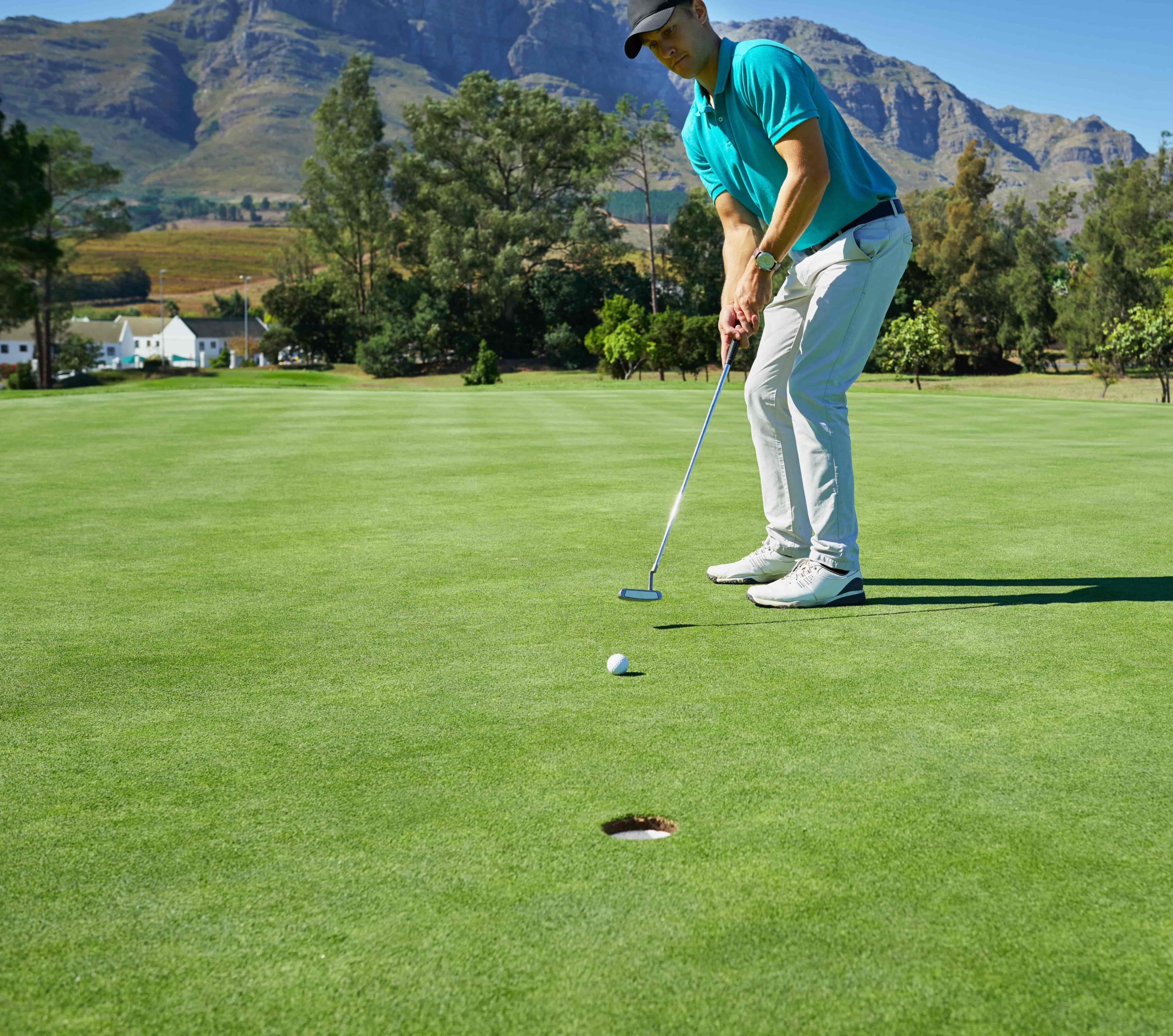
You can have perfect putting alignment and a square stroke, but if you leave your first putt 15 feet short or blast it 10 feet past the hole, you will three-putt every time. Distance control — also called “lag putting” — is the single most important skill for lowering your scores. The best players in the world don’t make every long putt; they leave themselves tap-ins. This guide reveals proven techniques for mastering distance control, from the backstroke length method to feel-based drills that work on any green speed.
The Backstroke Length Method (Your New Best Friend)
Most amateurs try to control distance by feel alone, which fails under pressure. The backstroke length method replaces guesswork with a repeatable system. The principle is simple: the length of your backstroke determines the distance the ball travels, assuming you keep the same tempo. On a medium-speed green, a ten-foot putt requires a backstroke of about four inches (measured from the center of the ball to the farthest point of the backswing). A twenty-foot putt requires an eight-inch backstroke. A thirty-foot putt needs a twelve-inch backstroke. A forty-foot putt needs a sixteen-inch backstroke. To learn these lengths, place alignment sticks or tees on the ground to mark each backstroke distance. Practice making strokes to each length without worrying about where the ball goes. Your only goal is hitting the exact backstroke length every time. Once you can do this consistently, add the ball and watch how predictable your distances become. This system works because it removes the variable of swing effort — you simply make the same tempo swing with different backstroke lengths.
The Tempo Rule: Same Rhythm, Different Length
Distance control collapses when your tempo changes. The secret rule: keep the exact same rhythm for every putt, regardless of length. Your backswing and through-swing should take the same amount of time. A great way to ingrain this is using a metronome or a verbal count. Set a metronome to 70 beats per minute. On the first beat, start your backswing. On the second beat, make contact with the ball. The length of your backswing changes, but the timing from start to impact remains constant. Another method: say “one-thousand-one” on the backswing and “one-thousand-two” as you strike the ball. For a long putt, your backswing is longer but still takes the same “one-thousand-one” count. To test your tempo, practice putting with your eyes closed. If you can’t feel a consistent rhythm, your tempo is inconsistent. A great drill is the “click drill” — use a putting clicker or simply tap your back foot on the ground as you start your backswing and again at impact. The taps should be evenly spaced regardless of putt length.
The Pendulum Feel: Shoulders, Not Hands
Wristy putting strokes make distance control nearly impossible because small wrist movements create unpredictable changes in clubhead speed. The solution is a shoulder-driven pendulum stroke. Lock your wrists completely — they do not move during the putt. Your shoulders rock back and forth like a pendulum, moving your arms and the putter as one unit. To feel this, hold a tee between your left thumb and forefinger, pinning it against the putter grip. If the tee falls during your stroke, you moved your wrists. Another drill: place a second ball between your forearms and hold it there by squeezing your elbows together. Make putts without dropping the ball. This forces a connected, shoulder-only motion. The pendulum stroke has another advantage: the distance the ball travels is directly proportional to the length of the backswing. With a wristy stroke, that relationship breaks down. Spend one whole practice session hitting putts using only your shoulders. Your distance control will improve immediately.
The Ladder Drill: The Ultimate Distance Control Test
No drill improves distance control faster than the ladder drill. Place tees in the green at 10, 20, 30, 40, and 50 feet from your starting point. Your goal is to putt to each tee, trying to stop the ball as close to the tee as possible without going past. Score yourself: 3 points for stopping within one foot of the tee, 2 points for within two feet, 1 point for within three feet. Zero points if you go past the tee by more than three feet. Start with three balls at the 10-foot mark. When you can consistently score 7 or more points out of 9, move back to 20 feet. This drill teaches you to think in terms of leaving yourself a tap-in, not making the putt. The best lag putters aim to leave the ball within a three-foot circle around the hole. The ladder drill builds this skill systematically. Do this drill at the start of every practice session for two weeks, and you will see dramatic improvement on the course.
Looking at the Hole for Feel
Your brain is remarkably good at judging distance visually, but most golfers never use this ability because they stare at the ball during the stroke. The secret technique: look at the hole during your practice strokes. Stand behind your ball, take two or three practice strokes while looking directly at the hole. Your brain automatically calibrates the stroke length needed to reach the hole. Then step up to the ball, take one last look at the hole, then look at the ball and stroke immediately — within two seconds. Do not stand over the ball thinking. The longer you wait, the more your natural feel disappears. Another variation: practice putting with your eyes closed after looking at the hole. This forces you to trust your feel rather than steering the putt. Tour players like Jordan Spieth use this technique on long putts to improve distance feel. Try it on the practice green: look at the hole during your practice strokes, then stroke while visualizing the ball rolling into the hole. The results will surprise you.
The One-Putt Length: Die It or Firm It?
There are two philosophies for distance control: “die it at the hole” or “firm it past.” Each has its place. For putts with significant break, the dying speed (ball rolling just fast enough to reach the hole) holds the line better because the ball is affected by slope longer. For straight putts or putts with minimal break, a firmer speed (ball would roll 12-18 inches past if it misses) takes out imperfections in the green. The secret is knowing when to use each. On slow greens, play more dying speed. On fast greens, play more firm because dying putts can be deflected by spike marks or imperfections. A great rule of thumb: for putts inside 10 feet, hit them firmly enough to roll a foot past; for putts outside 20 feet, die them at the hole. For putts between 10 and 20 feet, split the difference. Practice both speeds on the practice green. Hit ten putts to the same hole, five dying and five firm. Notice how each behaves differently. Build a library of feel for both speeds, and you’ll be prepared for any situation.
Green Speed Adjustment: The Stimp Rating
Different courses have different green speeds, measured by a stimpmeter. A slow green might stimp at 7 (very slow), while a fast green might stimp at 12 (very fast). Your backstroke lengths must adjust. The secret formula: for each increase of 1 on the stimp rating, reduce your backstroke length by about 10% for the same distance. For example, if a 20-foot putt requires an 8-inch backstroke on a stimp 9 green, on a stimp 11 green you need about a 6.5-inch backstroke. To learn green speed quickly, warm up with the “pace putt” drill: from 20 feet, putt three balls and note how far past the hole they roll. If they roll 6 feet past, the green is very fast. If they stop 2 feet past, it’s medium. If they stop at the hole, it’s slow. Adjust your backstroke lengths accordingly. Another method: find a flat 10-foot putt. Putt until you find the backstroke length that consistently stops within 6 inches of the hole. That backstroke length is your baseline for that green speed. All other distances scale from this baseline.
The Hand-Clap Drill for Distance Feel
Distance control is ultimately about feel, and feel can be trained. The hand-clap drill is a brilliant off-green exercise. Stand 10 feet from a wall. Hit a putt without looking at the ball — keep your eyes on the wall. Try to stop the ball exactly at the wall. The sound of the ball hitting the wall gives you instant feedback. Move back to 20 feet, then 30 feet. This drill trains your brain to associate stroke length with distance without visual feedback from the ball. Another variation: putt to a friend who stands at various distances. Your friend catches the ball with their feet. No looking up — just feel. These drills bypass the conscious mind and train your subconscious feel for distance. Do them for five minutes before every round. The feel you develop will transfer directly to the course, and you’ll find yourself leaving putts closer without thinking about mechanics.
The Three-Foot Circles: Your Scoring Zone
Here’s a mental shift that improves distance control immediately: stop trying to make long putts. Instead, focus on leaving every putt inside a three-foot circle around the hole. From 30 feet, a three-foot circle is a huge target — you have a 6-foot diameter to work with. When you think “three-foot circle” instead of “hole,” you swing more freely and actually get closer. On the practice green, draw three circles with tees or string: one at 2 feet diameter, one at 3 feet, and one at 4 feet. Putt from 20, 30, and 40 feet, aiming only to stop the ball inside the largest circle. When you can hit that consistently, move to the 3-foot circle. This is called “progressive target practice.” The best lag putters in the world think in terms of leaving a makeable second putt, not holing the first one. Adopt this mindset, and your distance control will improve because you stop trying to be perfect and start being smart.
The One-Handed Putting Drill
Putting with one hand forces you to develop a pure pendulum feel and exposes any flaws in your distance control. Start with your right hand only (for right-handers). Make 10-foot putts focusing entirely on a smooth, shoulder-driven stroke. Notice how you have to keep the putter face stable and tempo consistent to control distance. Then switch to left hand only. The weaker hand will reveal any jerky or wristy movements. Finally, putt with both hands but maintain the smooth feel you discovered with one hand. This drill is brutally effective because you cannot manipulate the putter with one hand — you must use a true pendulum motion. Do this drill for 10 minutes at the start of every practice session. Within a week, your distance control will feel transformed. Many teaching pros consider this the single best drill for developing touch and feel on long putts.
The bottom line on distance control: Master the backstroke length method with consistent tempo. Use the ladder drill to build precision. Learn to look at the hole for feel. Adjust for green speed before every round. Practice the one-handed and hand-clap drills to develop touch. Most importantly, change your mindset from “make the putt” to “leave it inside three feet.” When you stop trying to be perfect, you will actually get closer to perfect. Distance control is not magic — it is a skill that responds dramatically to deliberate practice. Spend 50% of your putting practice time on lag putts from 20 feet and beyond. Within one month, you will eliminate three-putts and watch your scores drop faster than any other change you can make.