Golf can seem like a maze of confusing rules when you first start. Between penalty strokes, hazard lines, and unfamiliar terms like “unplayable lie,” many beginners feel overwhelmed before they even finish the first hole. But here’s the truth: you only need to know about ten core rules to play confidently and keep pace with anyone. This guide strips away the complexity and gives you the essential rules every new golfer must know — no obscure tournament regulations, just practical knowledge that will keep you out of trouble and make the game enjoyable from day one.
Play the Ball as It Lies
This is the most fundamental rule in golf. Wherever your ball comes to rest, you must play it from that spot without moving, touching, or improving the lie. You cannot kick grass away, press down turf behind the ball, or move loose rocks that are touching the ball. The only exceptions are when the ball lies in ground under repair, on a cart path, or inside a sprinkler head — in those cases you get free relief. For everything else, play it as it lies. If you accidentally move your ball during address or practice swing, it’s a one-stroke penalty and you must replace it. This rule teaches you to handle all types of lies, from perfect fairway to divots and rough.
Out of Bounds and Lost Ball
White stakes or white lines mark out of bounds. If your ball crosses over a white stake or lands beyond it, you cannot play it. The penalty is one stroke, and you must return to the spot of your previous shot to play again — this is called “stroke and distance.” For a lost ball, you have three minutes to search. If you cannot find it within that time, the same penalty applies: one stroke and re-hit from the original position. Many beginners waste time searching beyond three minutes; don’t. A smart strategy is playing a provisional ball before leaving the tee if you think your first ball might be lost or out of bounds. Announce “provisional” clearly, then hit another ball. If you find the first, pick up the provisional with no penalty. If the first is lost, continue with the provisional counting as your third shot.
Penalty Areas (Formerly Water Hazards)
Red stakes or lines mark lateral penalty areas (usually running alongside a hole), and yellow stakes or lines mark standard penalty areas (typically crossing the fairway). If your ball lands inside a penalty area, you have several options. For both red and yellow areas, you can take a one-stroke penalty and drop anywhere behind the penalty area on a straight line from the hole through where your ball last crossed the margin. For red penalty areas only, you have two additional options: drop within two club-lengths of where the ball last crossed the margin on either side, or drop within two club-lengths of a point on the opposite side equidistant from the hole. You can also choose to play the ball as it lies inside the penalty area without penalty, but you cannot ground your club in a penalty area before making your swing. Most beginners simply take the drop option to avoid frustration.
Unplayable Lie
You are the sole judge of an unplayable lie. Anywhere on the course except inside a penalty area, you can declare your ball unplayable for a one-stroke penalty. This is useful when your ball is wedged against a tree root, buried deep in thick bushes, or sitting in a divot you don’t want to play from. Once declared, you have three choices. First, drop within two club-lengths from where the ball lies, no closer to the hole. Second, go back as far as you want on a straight line from the hole through the ball’s current position, then drop anywhere on that line. Third, re-hit from the original spot of your previous shot. You cannot simply kick the ball into a better lie — you must take a penalty stroke and follow one of these three options. This rule saves you from ruining your clubs or injuring yourself on bad lies.
Order of Play
On the teeing ground, the player with the lowest score on the previous hole has the “honor” and tees off first. If scores were tied, the order from the previous hole continues. During the rest of the hole, the player farthest from the hole plays first. This is called “away plays first.” However, in casual rounds with friends, most groups play “ready golf” — whoever is ready to hit without endangering others can play. Ready golf speeds up pace dramatically. That said, never hit into the group ahead of you. Wait until they are completely out of range. Also, never walk in someone’s putting line on the green; step around their line between ball and hole. These etiquette-based rules keep the game safe and respectful.
Counting Every Stroke and Penalties
You must count every swing you make with the intent to hit the ball, including whiffs where you miss completely. If you accidentally move the ball with a practice swing, that’s not a stroke but you must replace it. If you swing and miss intentionally, that doesn’t count. But if you intend to hit, even a fresh air swing counts as one stroke. Penalty strokes are added to your score for that hole as well. For example, if you hit out of bounds from the tee, you take a one-stroke penalty and re-tee, hitting your third shot. Then if you reach the green in two more shots and two-putt, your score for that par-4 is 3 (tee) + 1 penalty + 2 approach + 2 putts = 8. Many beginners forget to add penalty strokes, which leads to artificially low scores. Be honest — it’s the only way to track real improvement.
Relief from Abnormal Course Conditions
You are entitled to free relief (no penalty) from certain situations. These include ground under repair marked by white paint or blue stakes, casual water (any temporary puddle after rain), animal holes, cart paths made of concrete or asphalt, and embedded balls in closely mown areas (fairway, fringe). To take free relief, find the nearest point of complete relief from the condition — no closer to the hole — then drop within one club-length of that point. The ball must come to rest in the relief area, away from the original problem. If it rolls back into the condition, you can re-drop. A second bad drop allows you to place the ball by hand. Never play from a dangerous situation like standing water or rocks; take free relief and protect yourself. This rule prevents players from being punished for course conditions beyond their control.
Putting Green Rules
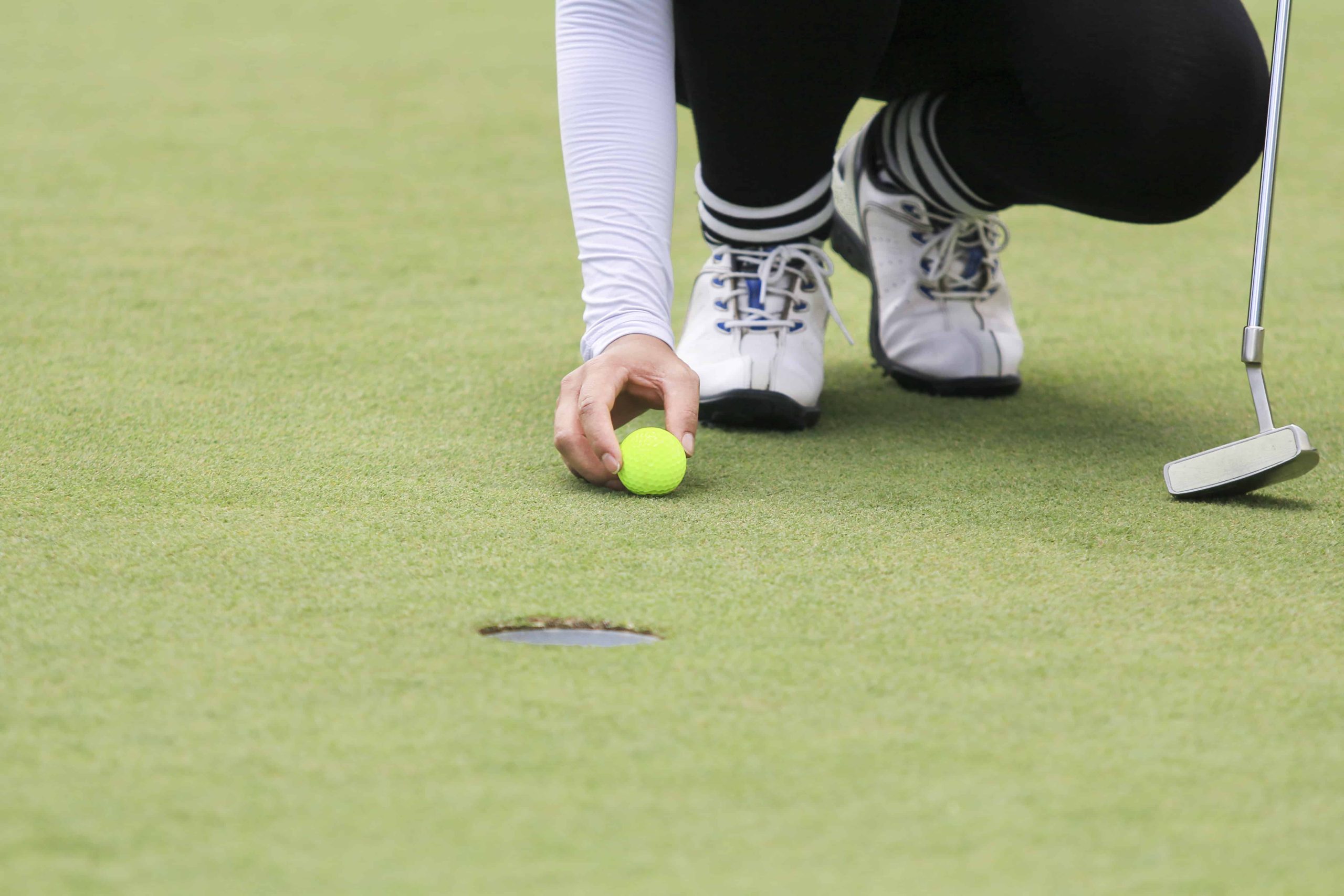
Once your ball is on the putting green, special rules apply. You may mark, lift, and clean your ball — but you must replace it on the exact spot. When marking, place a ball marker or small coin directly behind the ball. You can repair ball marks and old hole plugs but cannot fix spike marks or other imperfections before putting. You may remove loose impediments like leaves or sand with your hand, but you cannot test the green surface by rolling a ball or scraping the grass. Never step on another player’s putting line. If your ball strikes another ball at rest on the green, you incur a two-stroke penalty in stroke play. However, if another player’s ball strikes yours, there’s no penalty to you. After holing out, remove the flagstick carefully without damaging the hole. A flagstick may be left in or removed — both are allowed. If you putt with the flagstick in and your ball hits it, that’s a penalty unless the flagstick was attended or removed with authorization. To keep things simple as a beginner, always remove the flagstick when putting on the green.
Pace of Play and Ready Golf
While not a formal penalty rule in most casual settings, pace of play is the unofficial rule that matters most. Keep your pre-shot routine under 40 seconds. Take no more than three practice swings. Walk directly to your ball rather than following others. When you reach your ball, be ready to play while others are hitting their shots. On the green, putt out unless you’re conceding short putts in match play. If you’re playing a par-4 or par-5 and your score reaches double par (8 on par-4, 10 on par-5), pick up your ball and move to the next hole. This keeps groups moving and prevents frustration. Many courses enforce a maximum score of double par for beginners. The golden rule: never spend more than 15 seconds looking for a lost ball. Drop a new ball with a one-stroke penalty and keep playing. Slow play ruins the experience for everyone behind you.
Bottom line: You don’t need to memorize the entire rule book to enjoy golf. Focus on these eight categories: play it as it lies, out of bounds and lost ball penalties, penalty area drops, unplayable lie options, order of play with ready golf, counting every stroke, relief from abnormal conditions, and putting green basics. Carry a rules card in your bag or bookmark a simple rules app on your phone. Within three rounds, these rules will become second nature. The rest of the 200+ rules? You’ll learn them as situations arise. For now, keep up the pace, be honest with your score, and remember that every golfer — including pros — once had to look up what a lateral hazard meant.