Walking into your first golf lesson can feel like showing up on the first day of school in a new country. You don’t know the language, you’re not sure what to wear, and you’re secretly terrified the instructor will laugh at your swing. Here’s the good news: golf instructors have seen everything — from grown adults whiffing ten times in a row to former baseball players hitting worm-burners 200 yards. Your first lesson is designed to make you comfortable, not to rebuild your swing overnight. This guide walks you through exactly what happens before, during, and after that first session, so you can show up confident and get the most value from every minute.
Before the Lesson: What You Need to Prepare
Showing up prepared makes a massive difference. First, wear comfortable athletic clothing — collared shirts are preferred at many courses but not required for a lesson. Golf shorts or pants work best, but athletic joggers are fine. Wear flat-soled shoes; running shoes with heavy tread can make you unstable. If you own any clubs, bring them — even an old hand-me-down set. If you don’t own clubs, tell the instructor when booking; most facilities provide loaner clubs at no extra charge. Arrive fifteen minutes early to stretch, use the restroom, and hit five warmup putts. Bring water and a small notebook. Most importantly, leave your ego in the car. You will top balls. You will miss the ball entirely. That is expected and normal. Instructors genuinely enjoy helping absolute beginners because they improve faster than anyone else.
The First Five Minutes: Conversation and Goals
Your lesson will not start with swing advice. The first five minutes are a conversation. Your instructor will ask about your athletic background — have you played baseball, tennis, hockey? Those transferable skills matter. They will ask about your goals: do you want to break 100, play socially without embarrassment, or eventually compete? Be honest if you just want to survive a company golf outing. The instructor will also ask about any physical limitations — back pain, shoulder issues, knee problems. Never hide injuries; golf swings can aggravate existing problems. You will also discuss lesson format: some instructors teach strictly indoors on simulators, others on outdoor ranges. Both work well for beginners. By the end of this chat, you and your instructor agree on one or two specific objectives for the session, never more. Overloading a beginner with six swing thoughts is a recipe for disaster.
Grip, Posture, and Alignment: The Holy Trinity
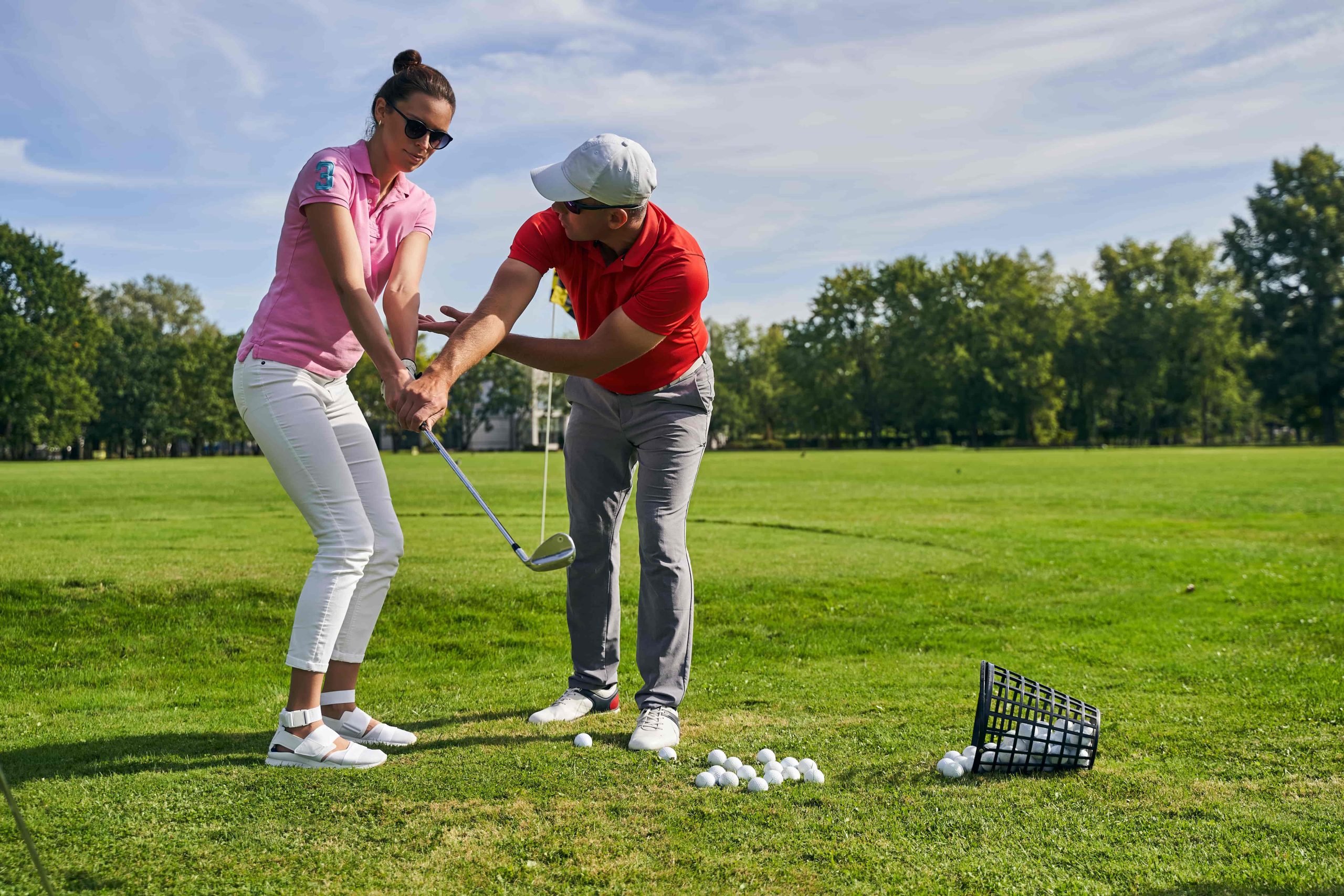
Once the conversation ends, the real work begins — but not with full swings. The first technical focus is always the grip. Most beginners hold the club like a baseball bat, deep in the palms. Your instructor will reposition the club into your fingers, show you the overlap or interlock grip, and explain grip pressure (hold it like you’re gripping a tube of toothpaste with the cap off — firm enough not to drop, soft enough not to squeeze paste out). Then comes posture: feet shoulder-width apart, knees slightly flexed, spine tilted forward from the hips without rounding the back. The instructor will likely use alignment sticks on the ground to check your feet, hips, and shoulders are parallel to the target line. This feels extremely unnatural at first. You will feel like you’re leaning too far forward. Trust the process. After twenty reps, it will start feeling normal. Many instructors spend twenty full minutes on grip and posture alone — that’s a sign of a good teacher.
The Half-Swing and Making Contact
You will not hit driver or fairway woods in your first lesson. In fact, many first lessons never go beyond chip shots and half-swings with a 7-iron or pitching wedge. Your instructor will have you start with tiny swings — barely taking the club back to knee height — focusing on solid contact. The goal is not distance; the goal is hearing that clean click of clubface meeting ball. You will likely hit into a net or a short-range target. Do not be surprised if you miss the ball entirely on your first few swings. Even professional golfers occasionally whiff during warmups. Your instructor will give you one simple feel to work on, such as “keep your left arm straight” or “shift weight to your front foot.” Do not try to incorporate multiple tips at once. When you hit a good shot — and you will — your instructor will celebrate with you. Positive reinforcement is a huge part of beginner lessons.
Video Analysis: Seeing Is Believing
Many modern instructors use smartphone video or tablet analysis during the lesson. After you’ve hit ten or fifteen balls, they will show you slow-motion footage of your swing compared to a simple model swing. This is not to embarrass you. Seeing yourself on video is the fastest way to understand what “keep your head still” actually means. Your instructor will draw lines on the screen showing your spine angle, club position, or weight shift. You will likely see things you didn’t feel — like your back foot lifting too early or your shoulders tilting instead of turning. The video segment usually lasts five to ten minutes. Ask questions if something doesn’t make sense. A good instructor can explain the same concept three different ways. After the video review, you will hit another ten balls to feel the correction while the visual memory is fresh.
Drills You Can Practice at Home
Every good first lesson ends with specific homework drills. These are not vague suggestions like “practice more.” You will receive concrete exercises you can do without hitting balls. Common first-lesson drills include the towel drill (placing a towel under your armpits to keep arms connected to torso), the head-cover drill (placing a headcover outside the ball to prevent coming over the top), or the alignment stick drill for putting stroke. Your instructor might give you a grip trainer device to take home. Write down each drill in your notebook, including how many repetitions and how often. The magic number is usually three sessions of ten minutes each per week. Do not practice longer than fifteen minutes on any drill — fatigue ruins your mechanics. Some drills can be done indoors without a ball, like practicing your grip while watching TV or rehearsing your posture in front of a mirror.
Common Emotions During the First Lesson
Expect a rollercoaster of emotions, and know that every beginner experiences the same feelings. The first ten minutes might feel awkward and frustrating — your body refuses to do what the instructor asks. Then you’ll hit one perfect shot and feel like a genius. Then you’ll shank the next three and want to quit. This pattern is completely normal. Good instructors anticipate this and pace the lesson accordingly. You might also feel physically tired after thirty minutes; golf uses muscles you didn’t know existed. Never be afraid to ask for a water break. Some beginners feel embarrassed about their fitness level or flexibility. Do not be. Instructors work with players of all ages, shapes, and abilities. The only thing that bothers an instructor is a student who pretends to understand but doesn’t ask clarifying questions. If something feels wrong, speak up immediately.
What Your First Lesson Will NOT Cover
Managing expectations is crucial. Your first lesson will not fix your slice permanently. You will not learn how to hit driver. You will not master bunker shots or flop shots. You almost certainly will not play any holes during the lesson unless you booked an on-course playing lesson (which costs more and is not recommended for absolute beginners). Your instructor will not give you a complete swing overhaul in one hour. Anyone promising to transform your game in one session is selling false hope. A realistic first lesson outcome is this: you will understand the correct grip, you will hit several solid half-swing shots, you will leave with two or three drills, and you will feel excited to practice. That is a massive success. Championship golfers took thousands of lessons. Your journey is a marathon, not a sprint.
After the Lesson: Following Up Correctly
The lesson doesn’t end when you walk off the range. Within 24 hours, review your notes and re-watch any video your instructor sent. Practice the drills for ten minutes the very next day — fresh repetition locks in muscle memory. Book your next lesson before you leave the facility or within one week. Spacing lessons three to four weeks apart is too long for beginners; you will regress and waste time re-learning. Most experts recommend two to three lessons in the first month, then one lesson per month for maintenance. Before your second lesson, spend at least two range sessions focused only on the drills from the first lesson. Do not introduce YouTube tips or advice from golfing buddies between lessons. Conflicting information destroys progress. Trust your instructor for at least four lessons before evaluating if their teaching style suits you.
Final word: Your first golf lesson is not a test. It is an investment in enjoyment. The players having the most fun on the course are not the lowest handicappers — they are the ones who learned correctly from the beginning and never developed bad habits. Show up curious, not nervous. Ask every dumb question that comes to mind. Laugh at your worst shots. And remember that every single PGA Tour star once took their first lesson and probably topped the ball into their own foot. That awkward beginning is the price of admission to a game you can play for the next forty years. Go book that lesson — you’ve got this.