
With thousands of courses across the country, how do you choose the right one for your skill level, budget, and preferences? Playing a course that’s too difficult leads to lost balls, frustration, and slow play. Playing a course that’s too easy fails to challenge you. And paying premium prices for courses you can’t fully enjoy is a waste of money. This guide helps you match courses to your game. You’ll learn how to evaluate difficulty, length, layout, and atmosphere—and walk away with a decision matrix that works for any course, anywhere.
Step 1: Be Honest About Your Skill Level
Before you even look at course websites, assess your game honestly. Beginner (shoot 110-130, no established handicap): You need wide fairways, few forced carries over water, light rough, and forward tees. Avoid courses with “championship” or “players” in the name. High handicap (25-36): You can handle moderate challenges but still lose several balls per round. Look for courses with slope under 125 from your chosen tees. Avoid courses with many blind shots or elevated greens. Mid handicap (15-24): You can break 100 regularly and occasionally break 90. Courses with slope 120-135 are appropriate. You can handle some water hazards and bunkers. Low handicap (5-14): You break 90 consistently. You can play any course except the toughest championship setups. Scratch (0-4): You can handle any course, though the hardest slopes (145+) will still challenge you. Be honest about your driver distance, typical miss (slice or hook), and comfort with hazards. Overestimating your skill leads to a miserable round.
Step 2: Choose the Right Yardage
Yardage is the most important factor in course enjoyment. The old rule—multiply your 5-iron distance by 36—still works. If you hit 5-iron 150 yards, play courses from 5,400 yards. If you hit 5-iron 170 yards, play 6,100 yards. If you hit 5-iron 190 yards, play 6,800 yards. Modern alternatives: your driver carry distance times 28. Driver carry 200 yards = 5,600 yards; 220 yards = 6,160 yards; 250 yards = 7,000 yards. Most golfers play from tees that are too long. Survey after survey shows that 75% of amateurs play from tees longer than recommended for their skill. The result: longer rounds, higher scores, less fun. Move up a set of tees. You’ll enjoy the round more, and no one will judge you. Many courses now offer “combo tees”—a mix of two tee boxes that create custom yardage.
Step 3: Analyze Course Rating and Slope
Use the formula from our difficulty rankings guide to predict your score. Expected Score = Course Rating + (Handicap x (Slope Rating / 113)). If the expected score is more than 10 strokes above your typical round, the course is too hard for you—choose easier tees or a different course. If the expected score is more than 5 strokes below your typical round, you’ll be bored—choose harder tees or a more challenging course. For beginners without a handicap, use this shortcut: courses with slope under 110 and course rating under 70 (from forward tees) are beginner-friendly. Courses with slope 115-125 and course rating 68-72 (from middle tees) are suitable for high handicaps (25+). Courses with slope over 135 are for low handicaps only. Don’t ignore these numbers. They exist to help you.
Step 4: Consider Layout Features That Match Your Game
Different courses punish different weaknesses. Narrow courses: If you spray the ball, narrow fairways (30 yards wide) will cost you strokes. Look for courses with wide fairways (50+ yards) or open layouts like links or desert courses. Water hazards: If you struggle with water fear, choose courses with few water carries. Desert courses or mountain courses often have less water. Elevated greens: If you struggle with approach shots, avoid courses with severely elevated greens (where short shots roll back down). Bunkers: If you don’t practice bunker shots, choose courses with fewer bunkers (look for fairway bunkers count on the scorecard). Forced carries: If you can’t carry 150 yards in the air, avoid courses with forced carries over ravines or water. Read course reviews or ask the pro shop about specific features. Many course websites have hole-by-hole descriptions.
Step 5: Match Atmosphere to Your Preferences
Course atmosphere varies widely. Private vs. public: Private courses offer better conditions, fewer crowds, and more etiquette. But they require membership or a connection. Public courses range from casual munis to high-end daily fee. Pace of play expectations: Some courses enforce 4-hour rounds; others are more relaxed. Check the course’s policy before booking. Walking vs. riding: Some courses are walking-only (Bandon Dunes style); others require carts; most offer both. Choose based on your fitness and preference. Difficulty of course routing: Hilly courses (like mountain courses) are exhausting to walk; flat courses (like links or desert) are easier. Scenery vs. pure golf: Some courses prioritize dramatic views (ocean cliffs, mountain backdrops); others prioritize strategic design (Pinehurst No. 2). Decide what matters more to you. Practice facilities: If you want to warm up, check if the course has a driving range, putting green, and chipping area.
Course Types Explained: Links, Parkland, Desert, Mountain, Stadium
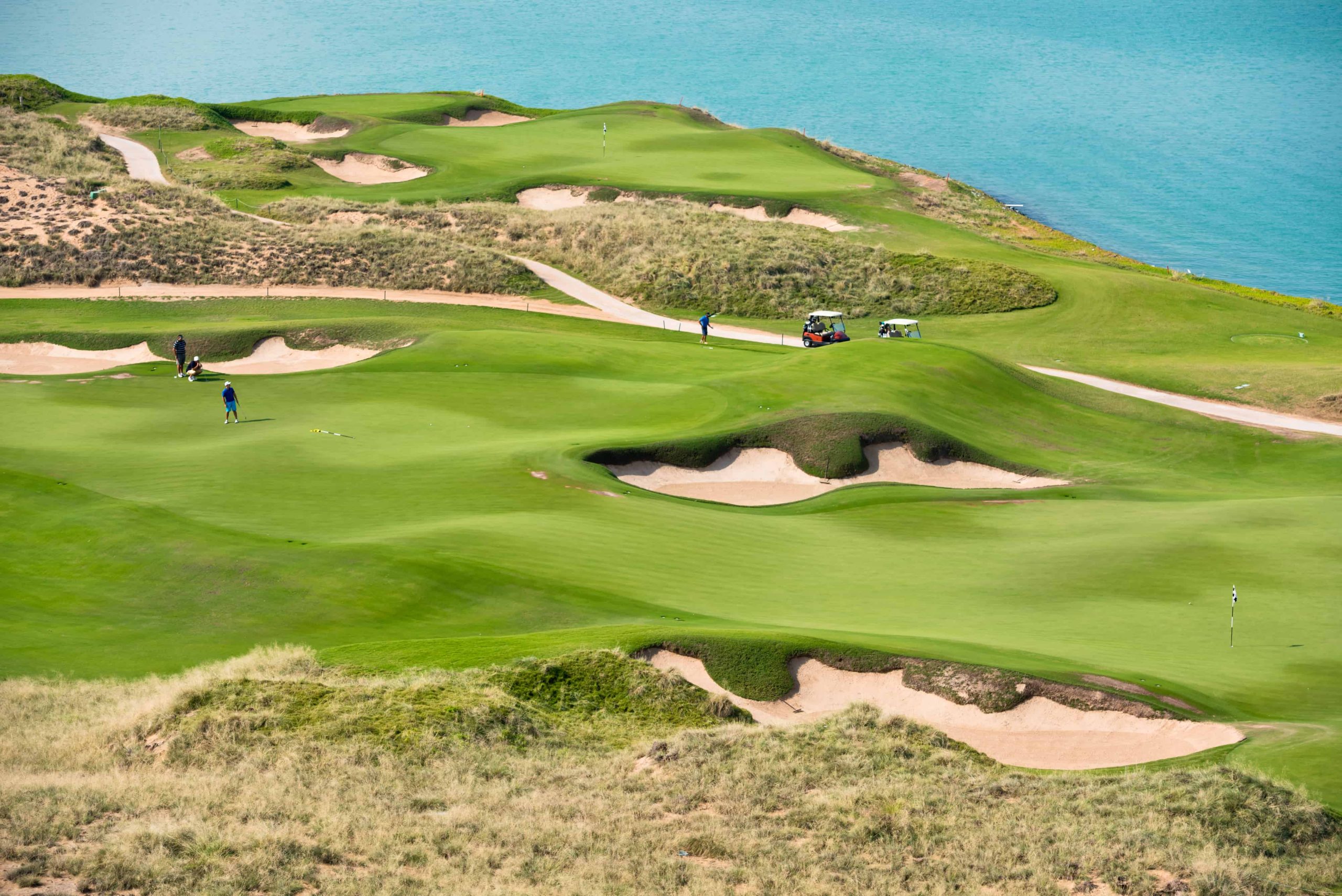
Each course type suits different players. Links courses: Wide fairways, few trees, firm conditions, pot bunkers, wind. Best for players who can control trajectory and enjoy ground game. Worst for players who need to see elevated greens or can’t handle wind. Parkland courses: Tree-lined, lush, water hazards, traditional design. Most common type in the US. Suitable for all skill levels, depending on length and hazards. Desert courses: Wide open, sandy waste areas, dramatic arroyos, firm conditions. Best for players who spray the ball but can avoid desert washes. Worst for players who can’t carry forced desert hazards. Mountain courses: Tight layouts, severe elevation changes, stunning views. Best for accurate players who are fit to walk hills. Worst for beginners or those with limited mobility. Stadium courses: Designed for spectators, featuring mounded rough and dramatic water. Best for low handicaps seeking a test. Worst for high handicaps (ball-eating water everywhere).
Using Online Tools to Find the Right Course
Several websites help you match courses to your game. GolfNow and TeeOff: Offer user reviews that often include difficulty comments. Sort by “beginner-friendly” tags. USGA Course Database: Look up any course’s Course Rating and Slope. Google Maps satellite view: Zoom in to see fairway width, tree density, and water hazards. 18Birdies or TheGrint: Include user ratings for difficulty, conditions, and pace. Local golf forums (Reddit r/golf, GolfWRX): Ask locals for course recommendations based on your handicap. Pro tip: call the pro shop directly and say, “I’m a 25 handicap. Which tees do you recommend, and is this course appropriate for my game?” Pro shop staff know their course and will give honest advice. If they say “play the forward tees and watch out for water on 7, 12, and 15,” you’ve gotten valuable information.
Avoiding Common Course Selection Mistakes
These mistakes lead to miserable rounds. Choosing based on price alone: The cheapest course might have terrible conditions, slow pace, and frustrating design. Spend a few extra dollars for quality. Choosing based on ego: “I’m not playing from the forward tees—those are for seniors and women.” That attitude leads to 5-hour rounds and shooting 110. Choosing tournament setups: Courses just after a tournament have rough grown out and pins tucked—the hardest conditions of the year. Ask when the course last hosted a tournament. Ignoring recent weather: After heavy rain, courses play longer (no roll), wet rough eats balls, and cart-path-only rules slow pace. Playing with the wrong group: If your foursome includes players of wildly different abilities, choose a forgiving course that doesn’t punish mishits severely. Save the tough tracks for when you play with similarly skilled friends.
Course Selection by Season and Region
Where you play matters as much as which course. Summer in hot climates (Arizona, Texas, Florida): Play early morning or twilight to avoid heat. Choose courses with water on every hole and shade. Winter in northern states: Many courses close or have temporary greens. Call ahead. Spring and fall in transition zones: Courses may be wet (spring) or firm (fall). Choose accordingly—wet courses play longer; firm courses reward ground game. Coastal courses: Wind is always a factor. Check wind forecast before booking. If winds exceed 15 mph, choose a sheltered inland course instead. Mountain courses: Check altitude. At 5,000+ feet, the ball flies 10% farther. Subtract 1-2 clubs from your usual distances. Always check course conditions before driving 2+ hours. A quick call can save a wasted trip.
Decision Matrix: Which Course for You?
Use this quick matrix to narrow your options:
\ufffd
\ue782
Case Studies: Matching Golfers to Courses
Case 1: Beth, 28-handicap, slices driver, loses 6 balls per round on average courses. Beth should choose a wide desert course like Mountain Shadows (Arizona) or a flat links-style course like Gearhart (Oregon). She should play forward tees (approx 5,200 yards). Avoid tight parkland courses with OB on both sides. Case 2: Mike, 18-handicap, hits driver 240 yards, hooks occasionally, wants scenic views. Mike would enjoy coastal courses like Pacific Grove (California) or mountain courses like Cranwell (Massachusetts). Play middle tees (approx 6,000 yards). Avoid crowded munis where pace exceeds 4.5 hours. Case 3: Sarah, 8-handicap, driver 260, accurate, wants to be challenged. Sarah should play championship layouts like Bethpage Black (NY) or The Ocean Course (SC) from appropriate tees (6,500-6,800 yards). She can handle slopes up to 145. Case 4: James, beginner, no handicap, first full round. James should choose a 9-hole executive course (par 33-35) with wide fairways and few water hazards. Play forward tees (approx 2,500 yards for 9). Avoid full-length 18-hole courses until he can advance the ball consistently.
The bottom line on choosing the right course: Be honest about your skill level, choose tees based on driver or 5-iron distance, use Course Rating and Slope to predict your score, and match layout features to your strengths and weaknesses. A great day of golf is more about the right fit than the famous name. A $50 course that matches your game will be more fun than a $300 course that humiliates you. Don’t let ego drive your decisions. Move up tees when needed. Read reviews. Call the pro shop. And when you find a course that fits perfectly—fair but challenging, beautiful but playable—make it your regular. The right course for you is the one where you walk off the 18th green already planning your next round.
| If You… | Choose a Course That Is… | Avoid Courses That Are… |
|---|---|---|
| Shoot 110+ | Slope under 110, wide fairways, few hazards | Championship tees, water on many holes, tight |
| Lose balls to slices | Desert or links, few trees, wide landing areas | Parkland with OB on both sides, narrow fairways |
| Want to walk | Flat routing, carts optional, short green-to-tee walks | Hilly, cart-mandatory, long walks between holes |
| Are on a budget | Municipal courses, twilight rates, replay rounds | High-end resort courses, peak season weekends |
| Want scenic views | Coastal, mountain, or desert with dramatic terrain | Flat inland courses with housing developments |
| Want a challenge | Slope 135+, multiple forced carries, fast greens | Wide-open executive courses, easy munis |