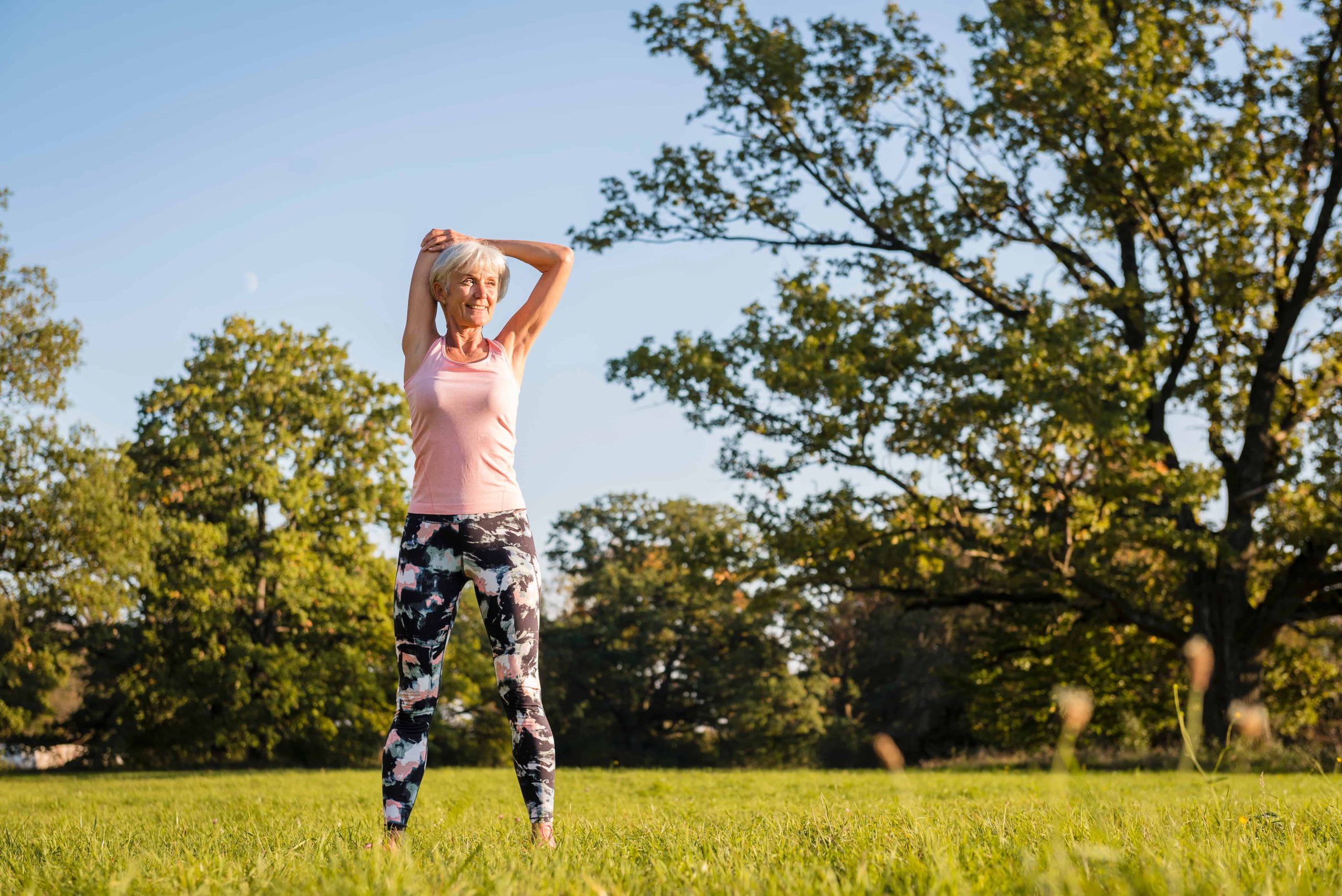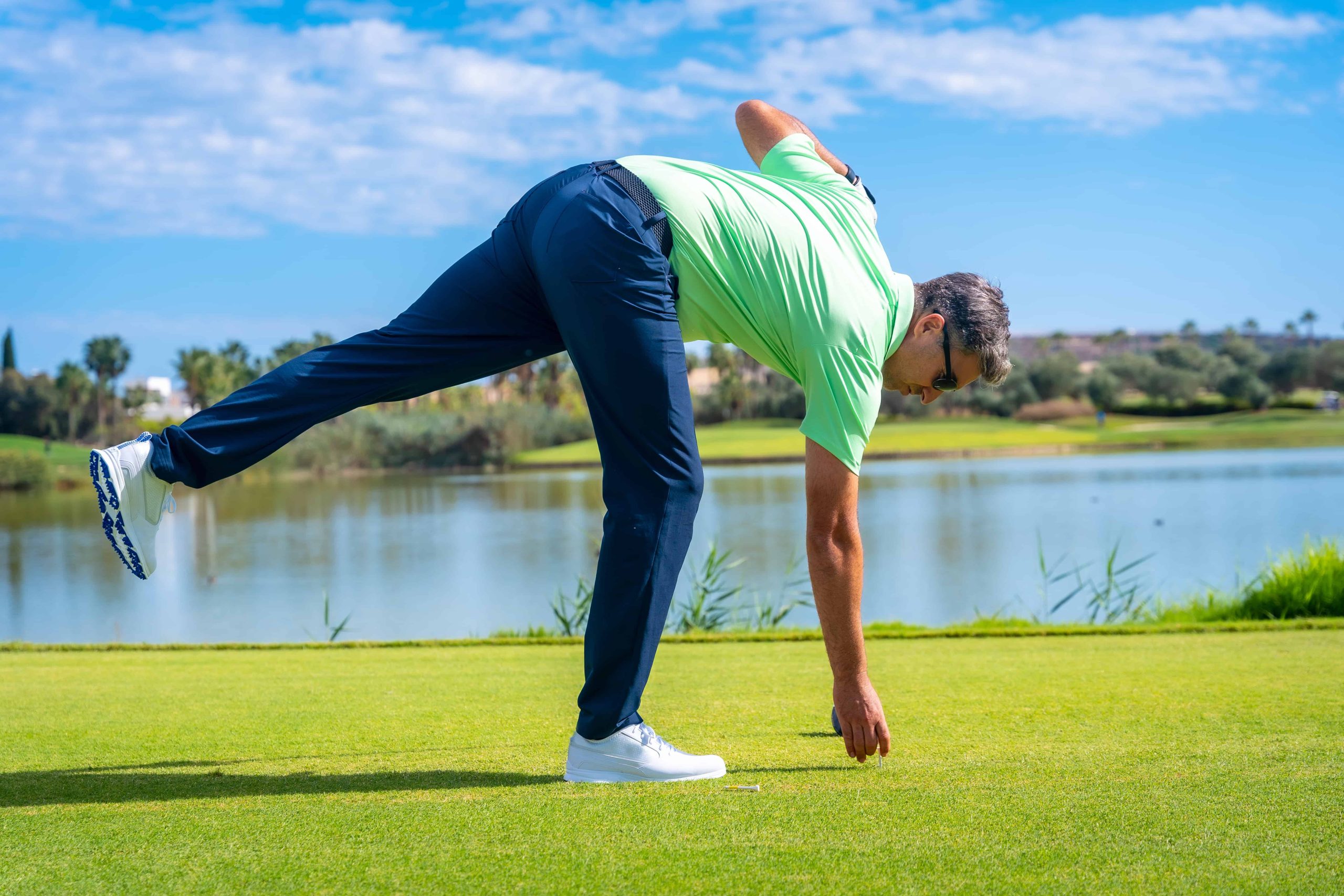

You’ve taken lessons, upgraded your clubs, and practiced for hours. But you still can’t complete your backswing without straining, and your follow-through feels abbreviated. The missing piece is often flexibility. A restricted body cannot produce a full, free-flowing golf swing. Limited hip rotation forces your lower back to overcompensate. Tight shoulders reduce your backswing arc. And restricted hamstrings prevent proper spine angle. This guide targets the specific flexibility limitations that rob golfers of swing control. You’ll learn targeted stretches and mobility drills that will add range of motion, reduce compensation, and improve swing consistency in as little as 10 minutes per day.
The 4 Key Areas Golfers Need to Stretch
Golf flexibility is not about general suppleness—it’s about mobility in four specific areas. Thoracic spine (upper back): Rotation here creates backswing width and prevents lower back compensation. Most adults lose 20-30 degrees of thoracic rotation from sitting and aging. Hips (especially internal rotation): The lead hip (left for right-handers) must rotate internally during the downswing. Restricted hips force the lower back to twist instead. Hamstrings: Tight hamstrings pull on the pelvis, causing rounded lower back posture and loss of spine angle. Shoulders (internal and external rotation): Full shoulder rotation allows a wider arc and prevents the “flying elbow.” Test yourself: can you clasp your hands behind your back (right hand over shoulder, left hand from below)? If not, your shoulders are restricted. Focus your stretching on these four areas, not generic “total body” flexibility. Golf-specific flexibility yields golf-specific results.
Thoracic Spine Mobility: The Overlooked Key to Rotation
Most golfers think they rotate their shoulders in the backswing, but they actually rotate their lower back—because the thoracic spine is frozen. This leads to lower back pain and abbreviated swings. Test: Sit on a chair, knees together, arms crossed. Rotate your torso left and right. If you can’t rotate past 45 degrees each way, your thoracic spine needs work. Fix: Thread the Needle stretch. Start on hands and knees. Slide right arm under left arm, lowering right shoulder to ground. Keep left hand planted. Hold 30 seconds, switch sides. Seated Thoracic Rotation: Sit on a chair, place left hand on left knee, right hand behind head. Rotate torso right, using left arm as leverage. Hold 20 seconds, switch. Foam roller extension: Lie on foam roller placed lengthwise along spine, arms extended overhead. Relax and let spine extend over roller. Hold 30 seconds. Perform these exercises daily. Within 2 weeks, you’ll notice a fuller backswing and reduced lower back strain. This is the #1 flexibility improvement for most golfers.
Hip Internal Rotation: The Power Source
Hip internal rotation is the ability to rotate your thigh bone inward while keeping your pelvis stable. In the golf swing, the lead hip must internally rotate during the downswing and follow-through. Test: Lie on your back, legs straight. Bend right knee to 90 degrees, keep left leg straight. Rotate right foot outward (external rotation) and inward (internal rotation). Normal range is 30-40 degrees internal. Most adults have 10-15 degrees. Fix: 90/90 stretch. Sit on ground, bend both knees to 90 degrees, one leg forward (shin parallel to body), one leg sideways (shin perpendicular). Gently lean forward. Hold 60 seconds each side. Pigeon pose: From all fours, bring right knee toward right wrist, right foot toward left wrist. Extend left leg straight back. Keep hips square. Hold 30 seconds each side. Lying internal rotation stretch: Lie on back, bend right knee 90 degrees, hold right knee with left hand. Use right hand to gently push right foot away from your body. Hold 30 seconds each side. Increased hip rotation transfers directly to power and reduces lower back torque.
Hamstring Flexibility for Posture and Power
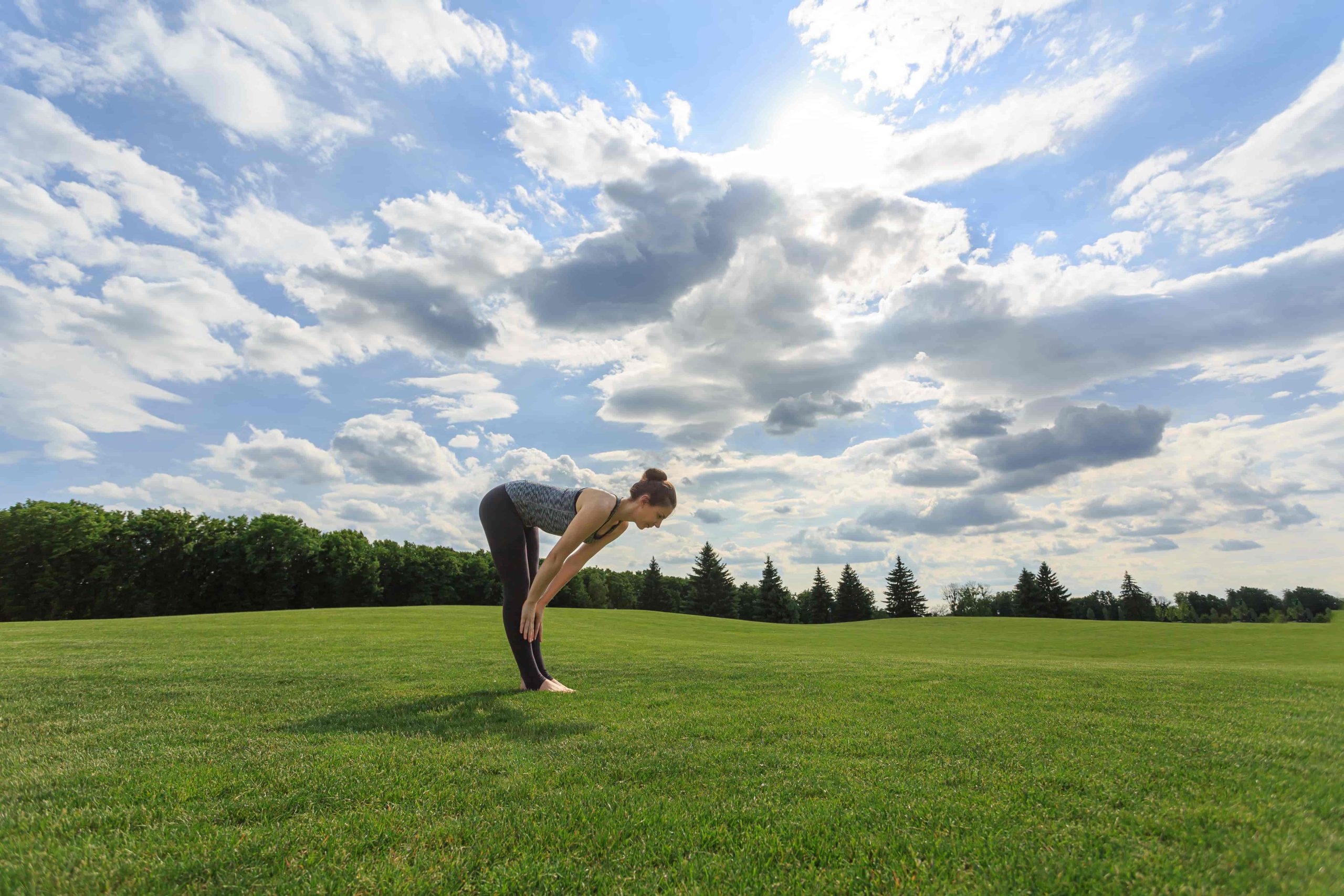
Tight hamstrings pull the pelvis into posterior tilt (tucking under), which flattens the natural arch in your lower back. This posture prevents proper spine angle at address and forces compensatory movements. Test: Lie on back with one leg straight up, holding a belt or towel around your foot. Standard range is 80-90 degrees. If you can’t lift your leg past 60 degrees without bending your knee, hamstrings are tight. Fix: Standing hamstring stretch with belt. Stand, place heel on a chair or bench, keep leg straight. Lean forward from hips (not waist), keeping back straight. Hold 30-60 seconds each side. Supine hamstring stretch with strap: Same as test position, but hold stretch for 2 minutes. Downward facing dog: From plank position, lift hips toward ceiling, press heels toward ground. Hold 30 seconds. Forward fold with flat back: Stand, knees slightly bent, hinge at hips, keep back flat, hands on shins. Do not round back. Stretch hamstrings, not lower back. Increased hamstring flexibility allows you to maintain spine angle through impact—a key to consistent ball striking.
Shoulder Mobility for a Wider Arc
Shoulder restrictions reduce your backswing width and force the lead elbow to bend or the trail elbow to fly. The golf swing requires shoulder external rotation (trail arm) and horizontal abduction (stretching across chest). Test: Raise right arm to shoulder height, palm up. Rotate forearm backward (external rotation). Normal range is 80-90 degrees. Fix: Sleeper stretch. Lie on right side, right arm extended perpendicular to body, elbow bent 90 degrees, forearm pointing up. Use left hand to gently push right forearm toward ground. Hold 30 seconds. Cross-body shoulder stretch: Bring right arm across chest, use left hand to pull closer. Hold 30 seconds each side. Shoulder dislocations (with resistance band or towel): Hold band with wide grip, arms straight, raise overhead and behind back. Increase grip width as needed. This stretch is named paradoxically—it actually mobilizes the shoulder joint safely when done correctly. Perform 10 slow repetitions. Improved shoulder mobility adds width to your arc, which adds clubhead speed without additional effort.
Wrist and Forearm Flexibility for Club Control
Wrist flexibility affects your ability to hinge properly, control the clubface, and avoid golfer’s elbow. Test: Extend right arm, palm up. Use left hand to gently pull fingers toward the ground (wrist extension) and toward ceiling (wrist flexion). Fix: Prayer stretch. Place palms together in front of chest, fingers pointing up. Lower hands toward waist, keeping palms together. Hold 30 seconds. Reverse prayer stretch: Place backs of hands together in front of chest, fingers pointing down. Lower toward waist. Hold 20 seconds. Wrist flexor/extensor stretch: Extend arm, gently pull fingers back (flexor stretch) and push palm down (extensor stretch). Hold 20 seconds each side. Forearm foam rolling: Use a foam roller or lacrosse ball to roll forearm muscles from elbow to wrist. Spend 1 minute per arm. Wrist flexibility allows a proper wrist hinge in the backswing— critical for both power and clubface control. Without it, you’ll either cast early or restrict your arc.
Daily 10-Minute Golf Flexibility Routine
This routine targets all four key areas in just 10 minutes. Perform it daily, ideally in the morning or before practice. Minute 0-1: Cat-Cow stretch. On hands and knees, alternate arching and rounding back. 10 slow rounds. Minute 1-2: Thread the Needle. 30 seconds each side. Minute 2-3: Seated Thoracic Rotation on chair. 30 seconds each side. Minute 3-4: Pigeon pose. 30 seconds each side. Minute 4-5: 90/90 hip stretch. 30 seconds each side. Minute 5-6: Supine hamstring stretch with strap. 30 seconds each side (longer if time permits). Minute 6-7: Cross-body shoulder stretch. 30 seconds each side. Minute 7-8: Sleeper stretch. 30 seconds each side. Minute 8-9: Shoulder dislocations with band. 10 slow repetitions. Minute 9-10: Prayer stretch and wrist flexor stretch. 30 seconds each. This routine takes no equipment (except a strap or belt). Do it consistently for 2 weeks, then retest your range of motion. You will see measurable improvement. More importantly, your swing will feel freer and less strained.
Dynamic Flexibility vs. Static Stretching for Warm-Up
Understanding the difference between static and dynamic flexibility is crucial. Static stretching (holding a pose for 30+ seconds) is for daily flexibility maintenance—not for pre-round warm-up. Static stretching before exercise temporarily reduces power output. Dynamic flexibility (moving through range of motion) is for pre-round preparation. Examples for golf: arm circles (forward and backward), leg swings (forward/back and side/side), torso twists with club across shoulders, walking lunges, cat-cow (done dynamically). Protocol: Daily static stretching (this article’s routine) improves long-term range of motion. Pre-round dynamic warm-up prepares your body for explosive movement. Never static stretch cold muscles. Always warm up with 5 minutes of light cardio before static stretching. And never static stretch before a round—save it for after.
Measuring Your Flexibility Progress
Track your improvements to stay motivated. Thoracic rotation test: Lie on side with knees bent and arms straight out in front. Keeping lower body still, rotate top arm backward as far as possible. Measure angle (can use phone app inclinometer). Normal is 40-60 degrees. Hip internal rotation test: Lie on back, bend knee 90 degrees. Rotate foot inward (internal rotation). Normal is 30-40 degrees. Hamstring test: Lying leg lift with belt. Measure angle. 80-90 degrees is good. Shoulder external rotation test: Standing, elbow at 90 degrees, rotate forearm away from body. 80-90 degrees is normal. Retest every 4 weeks. Don’t chase extreme flexibility (gymnast levels) — golf requires functional range, not hypermobility. The goal is to restore the range you lost from sitting and aging, not to become a contortionist. For most golfers, gaining 10-15 degrees in each key area is achievable and transformative for swing control.
The bottom line on flexibility and swing control: Restricted thoracic spine, hips, hamstrings, and shoulders directly limit your backswing width, create compensatory lower back strain, and ruin swing consistency. Targeted daily stretching—10 minutes focused on these four areas—restores lost range of motion. Use static stretches for long-term flexibility (daily routine). Use dynamic movements for pre-round warm-up. Test your flexibility monthly to track progress. Within 4 weeks of consistent practice, you’ll feel a freer backswing, reduced lower back strain, and improved clubhead speed. The best equipment upgrade you can buy is a flexible body. No club fitting can compensate for a restricted swing. Start stretching today. Your scorecard will thank you.